Texas Utility Bill Assistance: CEAP, LIHEAP and Utility Help in 2026
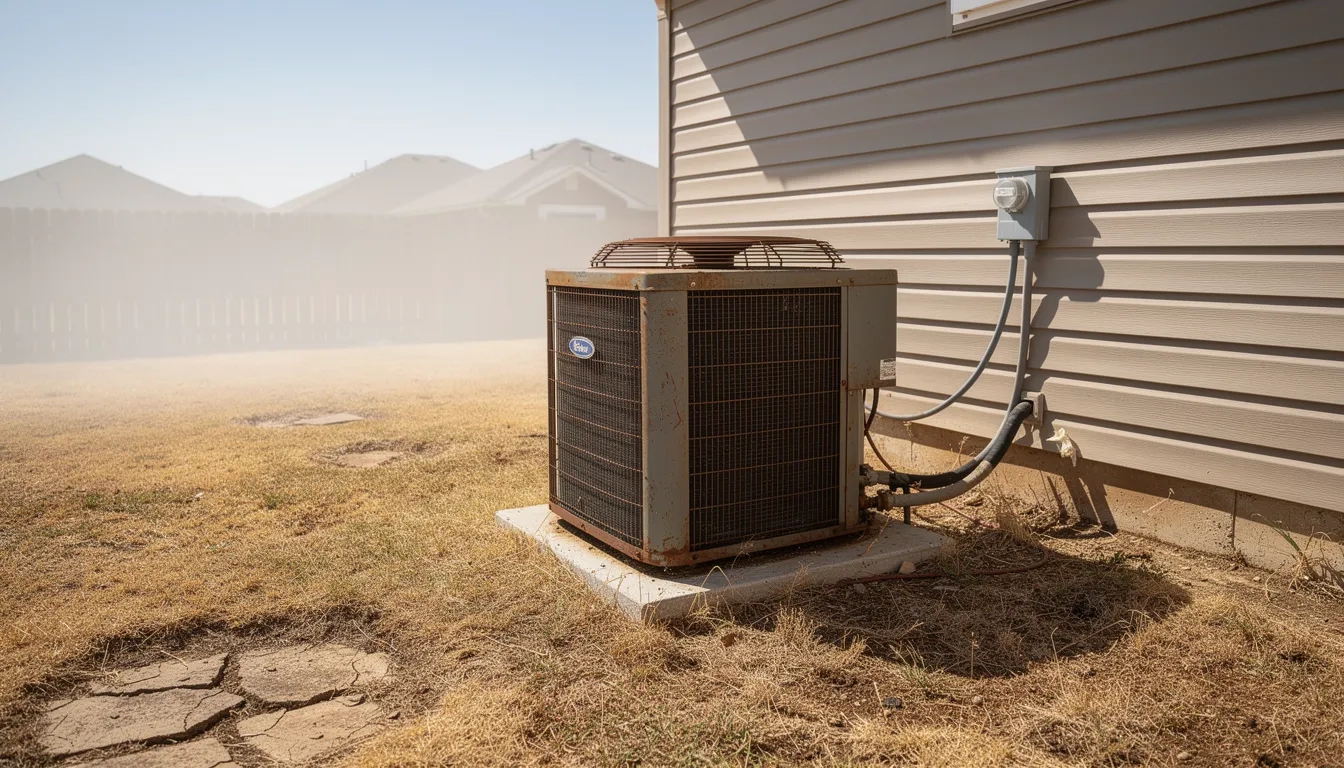
Texas summers turn air conditioners into second mortgages. A single 105-degree week in July can push an Oncor bill past $400, money that decides whether rent gets paid this month. Texas actually has real dollars set aside for exactly this problem — you just have to know where to look, and move before your utility company loses patience.
What CEAP (Texas's Version of LIHEAP) Actually Covers
LIHEAP is the federal program. In Texas, it runs under the name CEAP (the Comprehensive Energy Assistance Program), administered by the Texas Department of Housing and Community Affairs through a network of local Community Action Agencies. Same federal money, Texas branding.
CEAP pays toward electric, gas, or propane bills, and in some counties toward minor repairs that keep a home's cooling or heating system running. There's a crisis component that operates year-round, not just in winter. That matters in Texas, where a July heat index of 108 kills people faster than a January cold snap does.
Here's a misconception that costs people money: many assume LIHEAP is a heating program, so they skip applying in summer. Wrong move. TDHCA's guidance explicitly treats a disconnected air conditioner during extreme heat as a crisis situation, processed faster than a routine application.
If you remember one thing from this article, make it this: the crisis intake line moves in days, the regular application moves in weeks, and most people who lose their service never even ask which line they're standing in.
The tradeoff is coverage isn't unlimited. Local agencies get a fixed federal allotment each year, and once a county's Community Action Agency spends its share, it's gone until the next funding cycle. That's why timing your application (more on that below) matters almost as much as qualifying for it.
Income Eligibility: Do You Actually Qualify
Texas sets CEAP eligibility at 150% of the federal poverty guidelines, which sounds abstract until you see actual dollar figures. For 2026, a single person qualifies with income up to $23,475 a year; a family of four can earn up to $48,225.
- 1 person: $23,475
- 2 people: $31,725
- 3 people: $39,975
- 4 people: $48,225
- Add roughly $8,250 per additional household member
That's gross income for everyone in the home, not just the applicant. A grandmother's Social Security check and a teenager's part-time job both count, which trips up more applicants than anything else on this list.
Here's the table worth bookmarking, because most articles bury the differences between your options:
| Program | What It Covers | Income Cutoff | Application Window |
|---|---|---|---|
| CEAP / LIHEAP (via TDHCA) | Bill payment help, crisis shutoff prevention, some minor home repairs | 150% of federal poverty guidelines | Opens each January; funds run out fast, crisis help year-round |
| Oncor Electricity Relief Program | Monthly bill credit for qualifying customers | 125% of federal poverty guidelines | Rolling, apply through Oncor directly |
| CenterPoint Residential Bill Assistance | One-time bill credit | Varies by household documentation | Rolling, subject to funding |
| 2-1-1 Texas | Referral hub connecting you to CEAP, utility funds, and local nonprofits | No cutoff (it's a directory, not a benefit) | 24/7, every day of the year |
Notice something odd here: Oncor's own relief program has a tighter income limit (125%) than CEAP's (150%). A household can miss the utility's own program by a hair and still qualify for the state one. Worth checking both, always.
How to Apply Through Your Local Community Action Agency
Texas doesn't run one central CEAP office. It funds roughly seventy Community Action Agencies, each covering a specific set of counties, and you have to apply through the one assigned to your address.
Finding Your Agency
Call 2-1-1 (or 877-541-7905), or text your ZIP code to 898211, and a specialist will point you to the right office. TDHCA's "Help for Texans" tool online does the same thing if you'd rather not call.
What to Bring
- Government-issued photo ID for the applicant
- Proof of income for every adult in the household: pay stubs, benefit letters, tax returns
- A recent utility bill showing the account number and balance
- Proof of residency (lease, deed, or a piece of mail)
- Social Security numbers for household members, where required
Houston and Dallas agencies run online portals; smaller counties often still want you to show up in person or mail documents. Regular applications typically take 30 to 45 days to process. Crisis applications, tied to an actual disconnection notice, get expedited, often within 48 hours.
One practical note: agencies open their intake for the year in January, and funding is finite. In past cycles, some offices capped intake at a set number of applications and closed within weeks. Apply as early in the year as your paperwork allows, don't wait until a crisis makes the decision for you.
Utility Company-Specific Programs Worth Knowing
Beyond CEAP, individual utilities run their own hardship funds, and they're not competing with the state program, they stack on top of it.
Oncor's Electricity Relief Program offers a monthly bill credit to customers at or below 125% of the federal poverty level, applied directly through Oncor. It's a smaller cutoff than CEAP's, so don't assume one program's "no" applies to the other.
Oncor also historically ran a Low-Income Weatherization Program covering insulation and air sealing. Its 2026 funding was fully exhausted by mid-year, a reminder that these pots of money aren't bottomless. Checking back in January of the next cycle is a real strategy here, not empty advice.
CenterPoint Energy, serving greater Houston, offers Residential Bill Assistance: a one-time credit for eligible customers who submit income documentation. Texas Gas Service partners directly with LIHEAP/CEAP intake for its gas customers rather than running a separate fund.
Retail Electric Providers Also Have Charity Funds
If you're on a competitive retail plan (common in deregulated areas like Dallas-Fort Worth and Houston), your retail electric provider likely runs its own assistance fund, often financed by customer donations rounded up on their own bills. These funds are smaller and less publicized than CEAP, but they don't require the same paperwork gauntlet, so it's worth a phone call before you assume you're out of options.
The statewide Weatherization Assistance Program (WAP) sits at a more generous 200% of poverty guidelines and covers free insulation, air sealing, and HVAC tune-ups. It's a fix that lowers your bill every month going forward, not just once.
You Got a Disconnection Notice. Now What.
Don't panic, but don't sit on it either. Under Public Utility Commission of Texas rules, your retail electric provider must give you a written disconnection notice at least 10 days before cutting your power, and that date can't fall on a weekend or holiday.
The notice has to spell out the amount owed and how to avoid the shutoff, usually a deferred payment plan. Here's what most people don't realize:
- You can request a deferred payment arrangement even after getting the notice, not just before.
- Your provider cannot disconnect you over a previous tenant's unpaid balance.
- Non-electric charges (think home security add-ons or merchandise bundled onto your bill) can't legally trigger an electric shutoff.
- A disconnection notice itself qualifies you for CEAP's crisis track, which moves in days rather than weeks.
Call your Community Action Agency or 211 the same day the notice arrives. Waiting until the shutoff date to ask for help is the single most common way people lose service that was actually preventable.
Common Application Mistakes That Slow Everything Down
Most denials and delays trace back to a handful of avoidable errors, and they're almost never about actually being ineligible.
- Applying to the wrong Community Action Agency. Coverage areas are drawn by county, and an application sent to the wrong office just gets forwarded, burning days you don't have.
- Missing income documentation for one household member. Agencies need proof for everyone over 18 living in the home, even a roommate who isn't related to you.
- Assuming a past denial is permanent. Income limits and household size change year to year; someone denied in 2024 might easily qualify now.
- Bringing an outdated utility bill. Agencies typically want the most recent statement with your current account number and balance, not last year's printout.
- Applying only once and never checking utility-specific funds. CEAP and your utility's own hardship program aren't mutually exclusive — most households never realize they can pursue both.
Bottom Line
Texas utility assistance isn't one program, it's a small stack of overlapping ones, and the trick is working through them in the right order. Call 211 first if you're not sure where to start, since that one call routes you to CEAP, your utility's hardship fund, and any local nonprofit filling gaps in between.
- If you have a disconnection notice, treat it as a crisis case and call today, not this weekend
- Check both CEAP (150% poverty line) and your utility's own program (often 125%), since you might qualify for one and not the other
- Apply as early in the year as possible; January funding runs out faster each cycle
- Gather income proof for every adult in the household before you call, it saves a return trip
- Ask about weatherization (WAP) too: it fixes the bill problem instead of just patching it once
Frequently Asked Questions
Does CEAP only help once a year?
No, and this is the most common misunderstanding about the program. Most households can get one regular-season benefit per program year, but the crisis component (triggered by an actual disconnection notice or a documented health issue) is separate and can be accessed even if you already used your regular benefit.
How do I find my local Community Action Agency?
Call 2-1-1, text your ZIP code to 898211, or use TDHCA's "Help for Texans" search tool online. Each agency covers a fixed set of counties, so give them your actual address, not just your city name, since some metro areas span multiple agencies.
Is CEAP the same thing as LIHEAP?
Yes. LIHEAP is the federal program name; CEAP is what Texas calls its version, run by TDHCA through local Community Action Agencies. If you see either term used for Texas utility help, they're referring to the same funding stream.
Can I get help if I already have a disconnection notice?
Yes, and you should call immediately rather than waiting. A disconnection notice qualifies you for crisis-track processing, which moves in days instead of the standard 30-to-45-day timeline, and you can also request a deferred payment plan directly from your provider.
What if my income is slightly too high for CEAP?
Check your specific utility's own hardship program first, since some (like Oncor's Electricity Relief Program) have different rules, and retail electric providers often run smaller charity funds with less rigid cutoffs. Weatherization assistance also uses a higher 200% poverty threshold, so you may qualify there even if CEAP is out of reach.
Will applying for utility assistance affect my other benefits?
CEAP and similar utility assistance programs are generally not counted as income for other federal benefit programs. That said, mention your CEAP application when you recertify for SNAP or Medicaid so caseworkers have the full picture, since documentation requirements sometimes overlap in useful ways.