West Virginia FAFSA Deadline and State Aid Programs for 2026-27
Missing the FAFSA deadline in West Virginia isn't just a paperwork inconvenience. It can cost you $5,500 in Promise Scholarship money, $3,400 in Higher Education Grant funding, and potentially free tuition through the WV Invests Grant — all programs that fund real semesters at real schools, and all of them require that one federal form. The catch? Different programs have different deadlines, and the most generous ones come first.
The Two Deadlines That Actually Matter
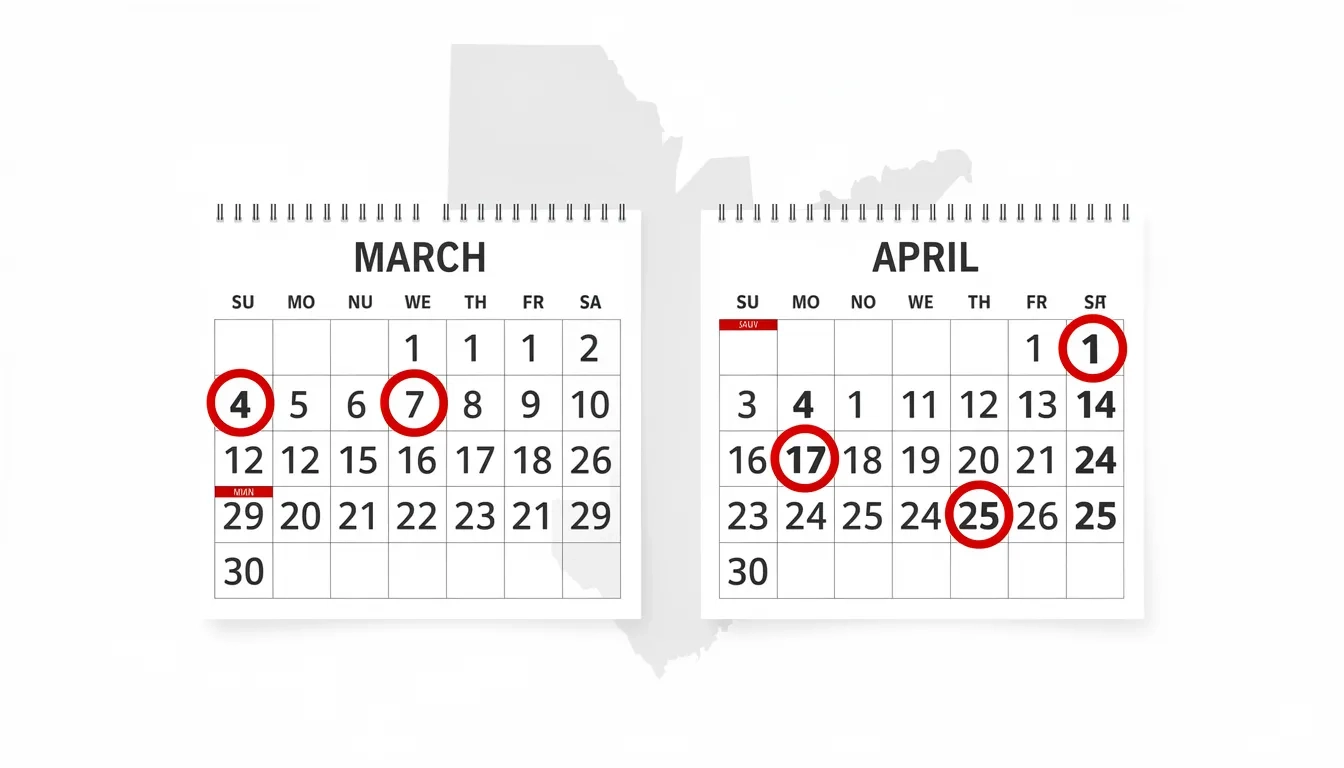
West Virginia doesn't have a single FAFSA cutoff. There are two: March 1 and April 15, and which one applies to you depends on which programs you're after.
The March 1, 2026 deadline covers the WV Promise Scholarship and the WV STEM Scholarship. Both require a completed 2026-27 FAFSA filed at studentaid.gov by that date — and the Promise application at cfwv.com/promise must also be submitted by March 1.
The April 15, 2026 priority deadline covers the WV Higher Education Grant Program and the WV Invests Grant. "Priority" is doing real work in that phrase. It doesn't mean you're locked out after April 15, but funding is limited and first-come, first-served logic applies.
The federal FAFSA technically stays open through June 30, 2026. But waiting until summer to file for state aid is a losing move — the money will likely be gone.
Treat March 1 as your hard deadline and April 15 as an absolute last resort. File by March 1 and you're eligible for everything West Virginia offers.
Here's the full picture at a glance:
| Program | Deadline | Type | Max Award |
|---|---|---|---|
| Promise Scholarship | March 1, 2026 | Merit | $5,500/year |
| WV STEM Scholarship | March 1, 2026 | Merit + Service | $3,000/year |
| Health Sciences Service Program | March 1, 2026 | Service/Loan Repay | $15,000–$30,000 |
| WV Higher Education Grant | April 15, 2026 | Need-based | $3,400/year |
| WV Invests Grant | April 15, 2026 | Last-dollar-in | Varies |
| Nursing Scholarship | June 1, 2026 | Service | Varies |
The Promise Scholarship — What It Actually Takes
The Promise Scholarship is West Virginia's most visible financial aid program, and the most misunderstood. Students assume a 3.0 GPA is enough. It isn't.
You need the GPA and the test scores. Both are mandatory, not one-or-the-other. A 4.0 student with a 20 composite on the ACT won't qualify. Neither will a student with a 22 composite and a 2.8 GPA.
The ACT requirements are a composite of 21 plus a minimum score of 19 in each individual subsection — English, Math, Science, and Reading. On the SAT, that's a combined 1080 with at least 510 in both Evidence-Based Reading & Writing and Math.
One thing that trips people up: the GPA covers both core courses and overall coursework. It isn't just the academic core — it's everything counted toward graduation. A student who coasted through electives and pulled their overall average below 3.0 won't qualify even if the core courses look fine.
A common misconception worth squashing: some students believe they can substitute strong test scores for a lower GPA, or vice versa. The program doesn't work that way. Both thresholds must be cleared simultaneously.
The good news? You have until July 2026 for the ACT and June 2026 for the SAT to achieve qualifying scores. Students who aren't yet meeting requirements should still apply by March 1 — late qualifiers may receive a spring semester award depending on available funding.
At Fairmont State University, where in-state tuition runs roughly $7,700 per year, the Promise Scholarship's $5,500 award covers about 71% of tuition alone. Stack it with other aid and you're looking at a genuinely manageable cost.
The WV Higher Education Grant — Need-Based and Often Overlooked
While Promise grabs headlines, the WV Higher Education Grant Program quietly serves students who need financial support more than a merit badge.
This is a pure need-based program. Eligibility comes entirely from your FAFSA data — specifically your Student Aid Index — not your GPA or test scores. For 2026-27, annual awards are estimated at $3,400. No separate scholarship application required; the FAFSA is the entire process.
Requirements are direct:
- U.S. citizen
- WV resident for at least 12 consecutive months before applying
- High school diploma or equivalent
- Full-time undergraduate enrollment at a participating institution
- No prior bachelor's degree
One detail worth knowing: the grant works at participating institutions in both West Virginia and Pennsylvania. Students who live near the state line and attend school in PA can still access this funding — a rare exception in state aid programs.
The grant is capped at 8 full-time semesters. After that, or after earning a bachelor's degree, eligibility ends.
West Virginia's median household income sits around $55,400, below the national median. Families that assume they "make too much" for need-based aid are often wrong. Filing costs nothing. The only cost of not filing is leaving $3,400 per year behind.
The WV Invests Grant — Free Community College, With Real Strings
If you're considering a certificate program or an associate degree at a public institution, the WV Invests Grant deserves serious attention. It's a "last-dollar-in" program — it fills the gap between your other aid and the actual cost of tuition, mandatory fees, and approved academic fees.
The math works like this: say your tuition is $4,500 and your Pell Grant covers $3,200. WV Invests can cover the remaining $1,300. Students with substantial federal aid may see smaller Invests awards, but those with less aid elsewhere could get tuition fully covered.
The strings are meaningful. A drug screening is required within 60 days before your first eligible term. You must complete 2 hours of community service every term you receive an award. And recipients must agree to live in West Virginia for two years after leaving at least half-time enrollment. Fail that residency obligation and you repay the grant with interest and collection fees.
The application lives separately at cfwv.com/wvinvests — the FAFSA alone doesn't enroll you in this program. Both need to be submitted by the April 15 priority deadline.
Specialized Programs Worth Knowing
West Virginia's aid system extends well beyond the flagship grants. Several targeted programs go underutilized because they're less visible:
WV STEM Scholarship — Up to $3,000 per year for students pursuing science, engineering, math, or technology. Priority goes to WV residents. There's a service obligation: one year of full-time work in a qualifying STEM field in West Virginia for each year the scholarship was received. Students who leave without fulfilling this must repay with interest. The March 1, 2026 deadline applies.
Underwood-Smith Teaching Scholars Program — The most generous scholarship in the state. It awards up to $40,000 total ($10,000/year) to 25 standout high school seniors who plan to teach math, science, elementary education, or special education in WV public schools, with a 5-year service requirement in an area of critical need. The 2025-26 application deadline was December 31, 2025 — already passed for current seniors. Juniors should mark their calendars for July 2026 when the next cycle opens.
HEAPS Grant (Higher Education Adult Part-Time Student Grant) — Designed for working adults enrolled part-time. Two tracks: the part-time component for degree-seekers, and the Workforce Development component for certificate and industry-credential programs (capped at $2,000/year). The Workforce component runs on a rolling, first-come basis starting July 1 each year.
Health Sciences Service Program — Loan repayment for final-year graduate students in medicine, pharmacy, dentistry, nursing, social work, physical therapy, and clinical psychology. Awards range from $15,000 to $30,000 in exchange for two years of practice in an underserved West Virginia area. Deadline: March 1, 2026.
How to Stack Aid — and What Most Students Get Wrong
The biggest mistake WV students make with financial aid is treating programs as mutually exclusive. Most of them stack.
A student who qualifies for the Promise Scholarship ($5,500) and the Federal Pell Grant (up to $7,395 for 2025-26) is already looking at close to $13,000 in annual aid before touching loans. Add the WV Higher Education Grant ($3,400) for students with demonstrated financial need and the picture changes substantially. That's a realistic scenario for many in-state students attending public universities.
Here's the sequencing that works:
- File the FAFSA at studentaid.gov — this unlocks the Pell Grant, Higher Education Grant, and WV Invests eligibility automatically
- Apply for Promise at cfwv.com/promise — separate application, same March 1 deadline
- Apply for STEM or Health Sciences if applicable — separate applications, March 1 deadline
- Apply for WV Invests at cfwv.com/wvinvests if pursuing a certificate or associate degree — April 15 deadline
One non-obvious point: WV Invests is calculated after all other aid is applied. Maximizing your Pell and Promise aid technically reduces the Invests award. But that doesn't mean you should avoid those programs — the net result is nearly always more total funding.
The West Virginia aid system is genuinely competitive compared to many states. The problem isn't the money — it's awareness. Students who miss March 1 aren't losing because the state is stingy. They're losing because nobody told them early enough that a FAFSA and a separate program application are almost always both required.
CFWV's "Txt 4 Success" program (cfwvconnect.com/txt-4-success) offers text-message counseling through the process — understated and worth using. The financial aid hotline at 877-987-7664 connects directly to WV Higher Education Policy Commission staff.
Bottom Line
- File the 2026-27 FAFSA by March 1, 2026 if you're after the Promise Scholarship or STEM Scholarship. April 15 is the fallback for the Higher Education Grant and WV Invests — not your target.
- Submit program-specific applications at cfwv.com alongside the FAFSA. The FAFSA alone does not enroll you in Promise, WV Invests, or STEM scholarships.
- Promise requires both a 3.0 GPA and qualifying test scores — one without the other doesn't cut it.
- Aid stacks. Pell + Promise + Higher Education Grant can cover the large majority of in-state tuition at WV public schools.
- If you're a part-time or adult learner, check HEAPS. If you're in health care, STEM, or education, the service-obligation programs can wipe out meaningful loan debt in exchange for staying in West Virginia.
Frequently Asked Questions
Is the April 15 WV deadline the same as the federal FAFSA deadline?
No. The federal FAFSA deadline for 2026-27 is June 30, 2027 (end of the academic year). April 15, 2026 is West Virginia's state-level priority deadline for the Higher Education Grant and WV Invests Grant. Missing the state deadline means missing state aid — even if your FAFSA is eventually filed and processed federally.
Can I apply for the Promise Scholarship if my test scores aren't ready by March 1?
Yes, and you should. The Promise program accepts applications from students who haven't yet hit the score thresholds. You have until the July 2026 ACT and June 2026 SAT to qualify. Students who eventually meet score requirements may receive a spring semester award, subject to available funding. Apply first, test later.
Does the WV Higher Education Grant have a minimum GPA requirement?
No published GPA floor exists for the Higher Education Grant. The program requires "demonstrated academic promise" alongside financial need, but it's the FAFSA numbers that drive eligibility — not a transcript review. This makes it significantly more accessible than the Promise Scholarship for students with strong financial need but modest academic records.
I'm attending school in Pennsylvania. Can I still use WV state aid?
For the Higher Education Grant, yes — the award can be used at participating institutions in both West Virginia and Pennsylvania. The Promise Scholarship and WV Invests Grant are generally restricted to eligible WV institutions. Check cfwv.com/wvgrant for the current list of approved PA schools before assuming your institution qualifies.
What happens if I receive the WV Invests Grant and then move out of state after graduation?
Recipients who fail to live in West Virginia for two years after leaving at least half-time enrollment must repay the full grant received, plus interest and required collection fees. This isn't a soft suggestion — it's a contractual obligation built into the program. If you have plans to relocate post-graduation, factor this in before accepting the award.
Are there WV state aid options for graduate students?
Most flagship programs target undergraduates, but graduate students in health fields have real options. The Health Sciences Service Program awards $15,000 to $30,000 to final-year graduate students in medicine, dentistry, nursing, pharmacy, social work, and related disciplines who commit to two years of practice in underserved WV areas. The Medical Student Loan Program offers up to $10,000 per year (with forgiveness provisions) for MD and DO students at Marshall University, WVU, or the WV School of Osteopathic Medicine.