Student Loan Forgiveness for Rural Nurses: Your 2026 Guide
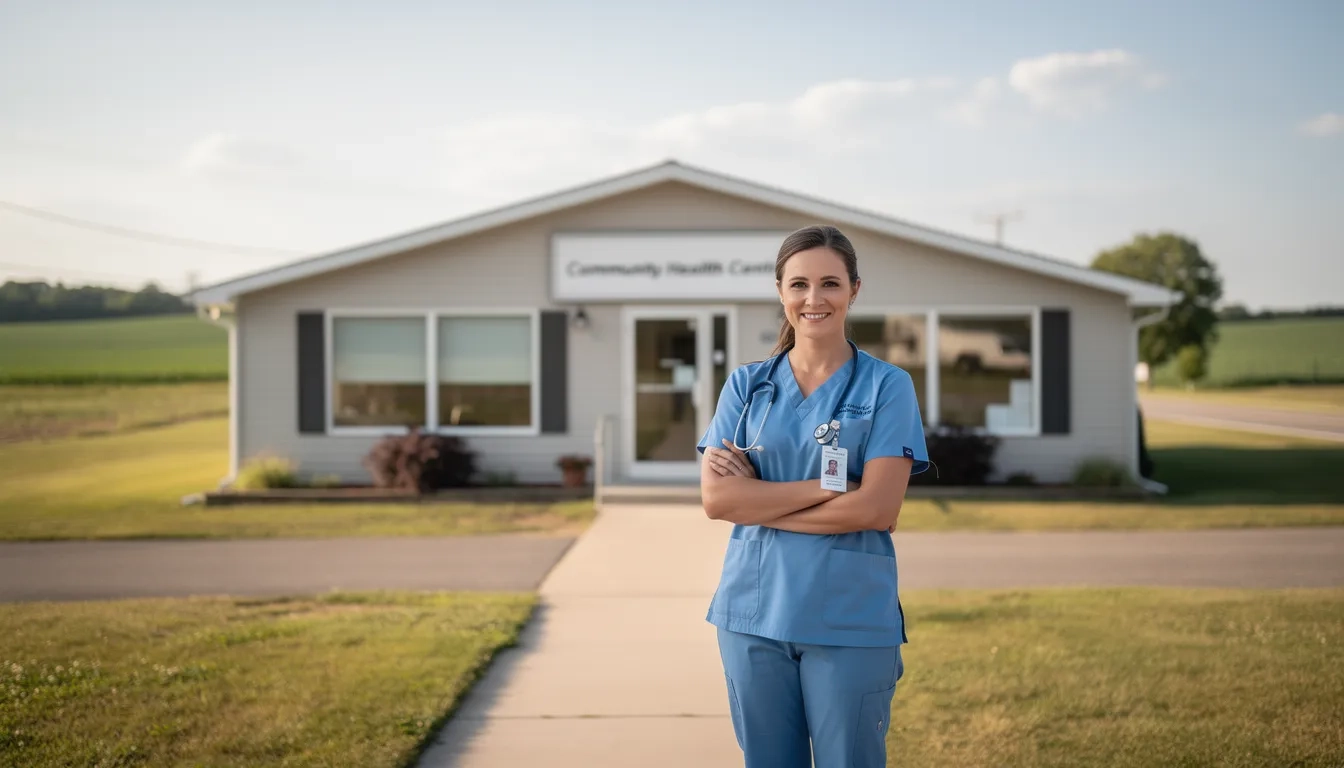
The average nursing student graduates carrying tens of thousands in student loan debt, and if your career takes you to rural West Virginia or the Texas Panhandle, that balance can feel like a punishment for doing genuinely hard work. It isn't. The federal government and 46 states have built repayment programs specifically to get nurses into underserved rural communities, and the awards are large enough to restructure your financial life. We're talking about up to $120,000 in tax-free loan forgiveness, paid directly to your lender.
Most nurses know vaguely that "loan forgiveness exists." Far fewer know the five distinct federal pathways, why the tax treatment matters more than the raw dollar amount, or how combining federal and state programs can eliminate debt faster than any single program can on its own.
Why Rural Nurses Sit in a Surprisingly Strong Position
83 million Americans live in areas with too few healthcare providers. According to HRSA's 2025 State of the Primary Care Workforce report, 63.1% of primary care Health Professional Shortage Areas (HPSAs) are in rural settings. Provider-to-patient ratios in these zones run as high as 1:3,500, compared to the national average of 1:1,320.
The government's loan repayment programs exist because rural facilities can't compete on salary alone. Forgiveness awards are how the system closes that gap. The worse the shortage, the more generous the potential award. Rural nurses sit in an odd spot: the willingness to work somewhere most clinicians avoid is precisely what the system will pay to incentivize.
One more thing to understand about "rural": it doesn't mean remote. Federal eligibility is based on HPSA designation and Medically Underserved Area (MUA) status, not a strict geographic definition. A small clinic 40 miles from a mid-sized city can qualify. HRSA's HPSA finder tool shows exactly which facilities and counties carry active designations.
The Federal Programs Worth Knowing
These five programs carry real money. Each has different eligibility rules and timelines, so they fit different career stages.
Nurse Corps Loan Repayment Program
Run by HRSA, the Nurse Corps LRP is the most nurse-specific federal program available. For direct-care nurses, it covers up to 85% of your unpaid nursing education debt: 60% over a two-year service commitment, then an optional third year that unlocks another 25%.
To qualify, you must work full-time at a Critical Shortage Facility (CSF), typically a federally qualified health center, rural health clinic, or another facility located within a primary care or mental health HPSA. Awards are competitive and not guaranteed, so applying in the first available window of each annual cycle matters more than most people expect.
NHSC Rural Community Loan Repayment Program
This program specifically targets providers fighting the opioid crisis in rural communities. Awards go up to $105,000 for full-time service and $55,000 for half-time, making it the single largest direct-award option for eligible rural nurses.
Eligible nurse types include registered nurses, nurse practitioners, psychiatric nurse specialists, and certified nurse midwives. The service site must be an NHSC-approved rural facility addressing substance use disorder. The geographic overlap between rural HPSAs and high-opioid-impact communities is large, so many rural nurses find qualifying sites nearby without relocating far.
NHSC Loan Repayment Program
The standard NHSC LRP is not exclusively rural, but rural HPSA sites score higher in the award prioritization system. Nurse practitioners and certified nurse midwives in primary care HPSAs qualify for up to $80,000 for a two-year full-time commitment.
Registered nurses in direct-care roles typically don't qualify for the standard NHSC LRP — it skews toward advanced practice providers. If you're currently an RN weighing an NP program, this is one concrete financial reason the credential change pays off.
NHSC Students to Service Program
For nurses in their final year of school, S2S offers up to $120,000 in loan repayment in exchange for a three-year service commitment in a high-need HPSA. The largest federal award available. For a nurse who graduates with a typical debt load, this can cover nearly everything.
The constraint is real: you commit before you graduate. For nurses who already know they want rural underserved work, it's the clearest-return option on the table. For those still uncertain about specialty or location, it demands more confidence than most students feel at that stage.
Public Service Loan Forgiveness
PSLF gets the most press, and it earns it — for the right borrower. Nurses at nonprofit or government employers (which covers most rural hospitals) can have their remaining federal loan balance forgiven after 120 qualifying payments under an income-driven repayment plan.
"87% of those who fulfilled their service commitments in 2021 are either still in a HPSA, or have remained in the community where they served." — NHSC Report to Congress
PSLF's weakness is the timeline: 10 years before forgiveness arrives. For a nurse with $60,000 in loans who qualifies for the Nurse Corps LRP, taking the direct repayment award and moving on beats waiting a decade. PSLF makes more financial sense when your loan balance is high relative to income, or when you're already several years into qualifying payments and switching strategies would reset the clock.
The Trump administration proposed changes to PSLF rules in 2025, including potential employer exclusions. Those proposals are still in regulatory review and haven't been finalized as of early 2026. Nurses relying on the 10-year pathway should monitor Department of Education updates closely.
State Programs: The Underused Layer
Here's where most nurses leave money on the table. Forty-six states run their own State Loan Repayment Programs (SLRPs), funded through a federal-state cost-share with HRSA. Many go undersubscribed because the application pool is far thinner than for federal programs.
| State | Program | Max Award | Key Requirement |
|---|---|---|---|
| West Virginia | SLRP | $40,000 (2 yr) + $25,000 extension | Full-time in rural/underserved area |
| North Carolina | Rural Nurse Initiative | Part of $50M state fund | RNs, CNSs in HPSAs or Tier 1/2 counties |
| Idaho | Rural Nursing LRP | Varies by cycle | RNs and LPNs in rural direct care |
| Minnesota | RN Loan Forgiveness | Varies | Nonprofit hospitals; opens Aug 2026 |
North Carolina's 2025 expansion is worth studying. The NC Department of Health and Human Services opened the program to independent private practices in rural Tier 1 and Tier 2 counties (ranked by the state's County Distress system), filling a gap that had previously excluded an entire class of eligible employers. With 91 of NC's 100 counties facing shortages in primary care, dental, or behavioral health services, and a rural population of 4.6 million who face nearly double the access barriers of urban residents, the expansion was long overdue.
The four states without active HRSA-funded SLRPs are Alabama, Arkansas, Florida, and New Hampshire, though some run state-funded alternatives. Check with your state health department directly before assuming no state option exists.
How to Stack Programs
Treating federal and state awards as complementary rather than competing is the smartest move. Here's a sequence that works in practice:
- Apply for the Nurse Corps LRP or NHSC Rural Community LRP at the federal level for the largest tax-free base award.
- Simultaneously check your state's SLRP. Many allow concurrent participation if one award doesn't cover your full loan balance.
- If you carry remaining federal loan balance after direct awards, enroll in income-driven repayment and count qualifying payments toward PSLF.
- Ask HR at your facility about employer-sponsored loan assistance. Larger rural health systems sometimes offer this quietly; it rarely appears in job postings.
Tax treatment changes the math in ways most nurses don't fully account for. NHSC programs, Nurse Corps, and most SLRPs are tax-free. Income-driven repayment forgiveness after 20-25 years is taxable — you could owe a sizable bill in the year the balance is wiped. A nurse who receives a $105,000 NHSC Rural Community award keeps every dollar. The same nurse waiting for IDR forgiveness after two decades might owe $15,000 or more in taxes on the forgiven amount, depending on their bracket. The headline numbers look comparable; the after-tax outcomes don't.
Before You Apply: The Eligibility Checklist
Getting tripped up on eligibility after a long application is genuinely frustrating. Run through these before investing time:
- Confirm your facility's HPSA or CSF designation using HRSA's online finder. Designation status changes, and applying to a non-designated site disqualifies you regardless of how rural the location feels.
- Check your loan types. Most programs cover only federal student loans. Private loans — including federal loans you've refinanced into private — are excluded. Once you refinance federal loans, you lose eligibility for all federal forgiveness programs permanently. No exceptions.
- Verify employment requirements. Most programs require full-time work (at least 32 hours per week for nursing). Some NHSC programs offer reduced awards at half-time, but the amounts drop significantly.
- Watch application windows. Nurse Corps and NHSC LRP open once annually. Waiting until funding is announced to start gathering documents costs you time you don't have.
- Get written confirmation from your employer that their site holds NHSC or CSF status before signing a service contract. Verbal assurances from HR won't protect you if the designation lapses.
One misconception that comes up constantly: many nurses assume they need to already be working in a rural area to apply. Several programs — S2S most directly — let you apply while still in school (the NHSC site search tool shows open positions at qualifying facilities, so you can find an eligible employer before accepting any offer).
Bottom Line
Rural nursing is one of the few career paths where choosing an underserved location directly accelerates debt elimination. The programs are real, the funding is substantial, and the application pool is small enough that qualified nurses actually get awards.
- Still in nursing school? Apply to NHSC Students to Service. Up to $120,000 for a three-year commitment is the highest-return option available right now.
- New grad or working RN/NP in a rural facility? Apply to Nurse Corps LRP or NHSC Rural Community LRP this cycle. Don't wait for "more information."
- Check your state program. 46 states have active SLRPs. Most go undersubscribed. This is funding nurses routinely miss.
- Don't refinance federal loans into private loans if you're considering any of these programs — it permanently closes every federal forgiveness door.
- Track PSLF regulatory changes if you're counting on the 10-year pathway.
The elephant in the room is that most nurses don't know these programs exist at this level of granularity. Understanding that the NHSC Rural Community LRP can pay $25,000 more than the standard Nurse Corps award — and that tax-free status adds another $15,000 in real value over taxable IDR forgiveness — is the kind of specific knowledge that actually changes long-term financial outcomes.
Frequently Asked Questions
Can registered nurses (not just nurse practitioners) qualify for rural loan forgiveness?
Yes, but eligibility varies by program. Registered nurses can access the Nurse Corps LRP, the NHSC Rural Community LRP, most state SLRPs, and PSLF (if working at a qualifying employer). The standard NHSC Loan Repayment Program primarily targets advanced practice providers like NPs and CNMs. For RNs, Nurse Corps and the Rural Community LRP are the strongest federal starting points.
Does "rural" have a formal definition, or is it based on feel?
It's based on federal designation, not intuition. A facility must be in a HPSA (Health Professional Shortage Area) or MUA (Medically Underserved Area) as designated by HRSA. Some qualifying facilities are in communities that don't feel remote at all — they've simply documented a provider shortage. Use HRSA's HPSA finder to check specific addresses before assuming you don't qualify.
What happens if my employer loses its HPSA designation while I'm serving out a commitment?
This is a real risk. If your site loses designation mid-service, your award can be affected. NHSC typically provides a grace period and tries to facilitate placement transfers to another qualifying site. Read your specific program's terms carefully, and ask your program officer directly what the process looks like before signing — the answer varies by program and situation.
Is loan forgiveness from these programs taxable income?
For most program-based awards, no. Nurse Corps LRP, NHSC programs, and the majority of state SLRPs are tax-free. That's a meaningful distinction from income-driven repayment forgiveness after 20-25 years, which is taxable. The tax-free status of direct repayment awards is one reason they're often more valuable than their dollar amounts suggest when you run the actual numbers.
What's the single biggest mistake nurses make with these programs?
Refinancing federal student loans into private loans before exploring forgiveness options. It's a one-way door. Once federal loans become private, you permanently lose access to Nurse Corps, NHSC, PSLF, and every other federal forgiveness program. A lower interest rate rarely compensates for giving up $80,000 to $120,000 in potential forgiveness. If you're considering refinancing and haven't maxed out your forgiveness options yet, wait.
Sources
- NHSC Rural Community Loan Repayment Program
- NHSC Loan Repayment Program
- Apply to the Nurse Corps Loan Repayment Program | HRSA
- NCDHHS Expands Student Loan Repayment Initiative for Rural Health Nurses
- Scholarships, Loans, and Loan Repayment for Rural Health Professions | Rural Health Information Hub
- The Complete Guide to Loan Forgiveness for Doctors and Nurses in Rural Areas | Student Loan Planner
- Health Workforce Shortage Areas | HRSA Data