Student Loan Forgiveness for Dentists: What Actually Works in 2025
The average dental school graduate finishes with $296,500 in student loan debt. That's before a residency, before practice startup costs, before anything resembling a stable financial life begins. Oral surgery and orthodontics specialists regularly push past $400,000. At a federal interest rate hovering around 7-8%, a $300,000 balance accrues roughly $21,000-$24,000 in new interest in year one alone — often before a new dentist earns enough to cover it. And yet there are dentists who've had those balances cleared entirely. The programs are real, the money is there, and understanding the rules is what separates dentists who pay off six figures they didn't have to from those who don't.
The Debt Burden Is Getting Worse Before It Gets Better
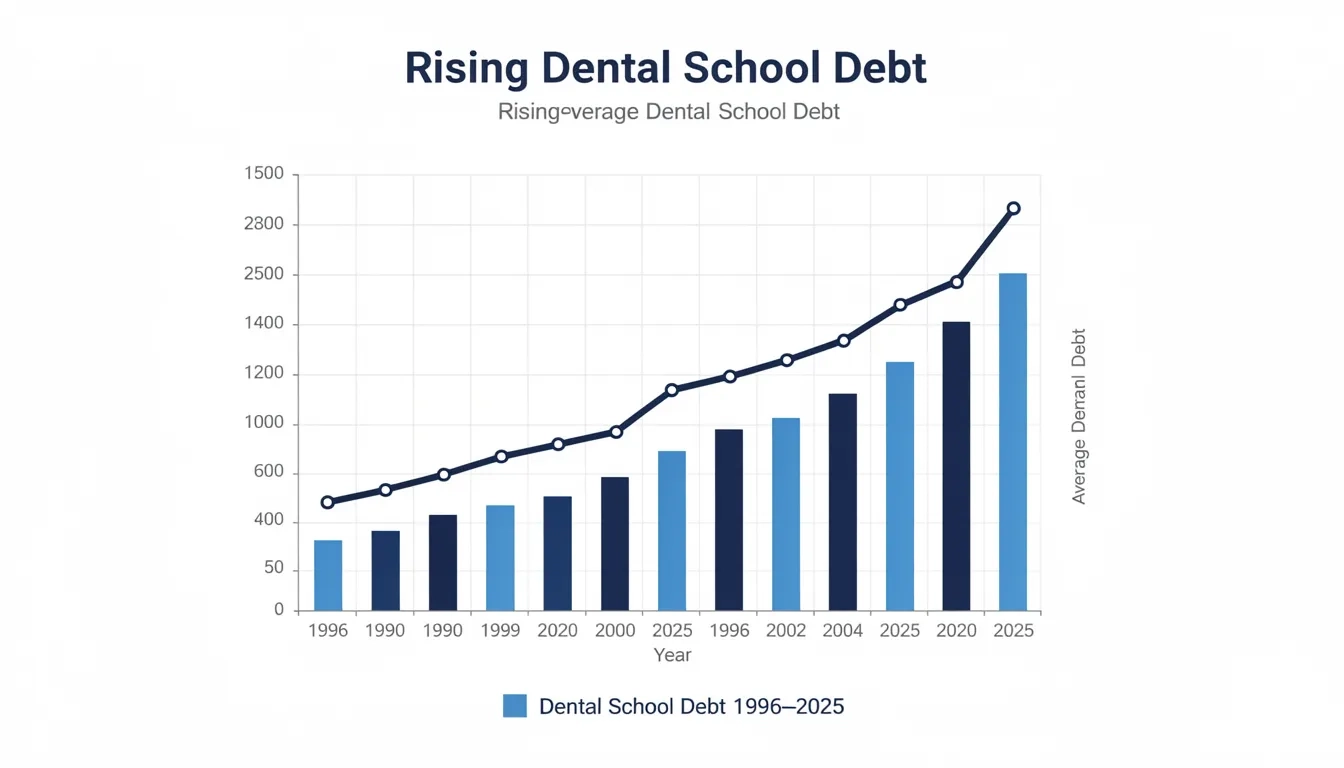
Highway Benefits tracking data shows dental school debt has risen by $83,621 since 1996. Every single year since 2015, over 80% of dental school seniors graduated with debt. More than a third of those graduates owed over $300,000.
Dental graduates carry some of the highest educational debt of any profession. The average medical school graduate exits with roughly $200,000. Dentists regularly blow past that figure. Part of the reason is structural — dental programs don't generate residency slots with meaningful stipends at the same rate medicine does, which means more dentists enter private practice directly, often without the loan counseling resources that hospital systems provide to physician residents.
The math is difficult. But the math also explains why multiple federal programs exist with real money attached.
Public Service Loan Forgiveness: The High-Value Path
PSLF is the most powerful forgiveness option available to dentists — when you qualify. Work full-time for a qualifying employer for 10 years, make 120 payments under an income-driven repayment plan, and the government forgives your remaining balance. No dollar cap. Tax-free.
The employer question is where most dentists mentally check out. Solo private practice doesn't qualify — true. But that ends the conversation for too many people who actually have options.
Qualifying employers for dental PSLF include:
- Veterans Affairs (VA) hospitals and clinics
- Dental schools and academic medical centers
- 501(c)(3) nonprofit health organizations
- Federally Qualified Health Centers (FQHCs)
- Federal, state, local, or tribal government entities
- Most hospital-based residency programs
The American Dental Association highlighted in 2024 how PSLF has enabled dentists to build sustainable careers in underserved communities that would otherwise be financially untenable at resident or early-career pay scales.
Here's the strategic angle most people miss: residency counts toward PSLF. An oral and maxillofacial surgery resident at an academic hospital is almost certainly employed by a qualifying institution. A six-year residency means six of the 10 required PSLF years complete before taking a first attending job. That dentist only needs four more qualifying years. During residency, income-driven payments stay low because resident salaries are low — so you're accumulating qualifying payments at minimal out-of-pocket cost.
"Dentists working for several different types of employers, including Veterans Affairs hospitals, dental schools, and many not-for-profit organizations, could qualify for PSLF." — American Dental Association, 2024
The PSLF Employer Search Tool at studentaid.gov lets you confirm a specific employer's eligibility before you accept a job offer. Use it.
NHSC Programs: Real Money for Serving Underserved Areas
The National Health Service Corps runs two programs specifically for dental professionals, and they're among the highest-dollar options available.
NHSC Loan Repayment Program (LRP): Commit to at least two years of full-time service at an NHSC-approved site in a Health Professional Shortage Area (HPSA) and you receive up to $55,000 in loan repayment for the 2026 award cycle. After your initial commitment, you can renew contracts — stacking additional awards until your balance is paid or you complete 10 years of public service.
NHSC Students to Service (S2S) LRP: This one is specifically for dental students in their final year. Participants receive up to $120,000, paid in four annual installments of $30,000 each, in exchange for a three-year post-graduation service commitment at an NHSC-approved site. Receiving this award in dental school is a significant financial event — six figures of debt removed before your first paycheck from a real job.
The power move: NHSC and PSLF can be combined. NHSC funds reduce your principal while you make PSLF-qualifying payments. Most FQHCs qualify under both programs simultaneously (which means your NHSC service also advances your 120-payment count). Dentists who stack these programs correctly cut their total repayment dramatically.
Other Service-Based Programs Worth Knowing
NHSC gets most of the attention, but several other programs are worth adding to your map.
| Program | Max Award | Commitment Required |
|---|---|---|
| NHSC LRP | $55,000/cycle | 2 years, HPSA site |
| NHSC Students to Service | $120,000 total | 3 years post-graduation |
| Indian Health Service | $50,000 total | 2 years, tribal communities |
| NIH Loan Repayment | $50,000/year | Qualifying research role |
| Military (Army/Navy/Air Force) | $40,000/year | Active duty commitment |
| VA Recruitment Program | Up to $200,000 total | VA employment |
The Indian Health Service program is consistently overlooked. At $25,000 per year (up to $50,000 total) for two years serving American Indian and Alaska Native communities, it's a meaningful award for dentists interested in that work.
The NIH Loan Repayment Program is the most valuable option for dentists who have shifted toward research careers. Up to $50,000 per year in loan repayment is substantial, and it's on top of a research salary. The program is competitive, but dental researchers with strong publication records and NIH-relevant work should take it seriously.
State programs are also real, not just footnotes. All 50 states, DC, and Puerto Rico maintain loan repayment programs for dentists (the American Dental Education Association keeps a current list, which is the right place to check since award amounts and eligibility shift year to year). Some states offer $30,000 total; others offer significantly more for rural or underserved placement.
Income-Driven Repayment for Private Practice Dentists
Most dentists end up in private practice, and private practitioners don't qualify for PSLF or NHSC. Their primary federal tool is income-driven repayment.
IDR plans set monthly payments as a percentage of discretionary income and family size. Early-career dentists with high debt and moderate incomes often pay far less per month than a standard 10-year plan would require. After 20 or 25 years (depending on plan type), any remaining balance is forgiven.
The catch with IDR forgiveness: the forgiven amount is currently treated as taxable income. If $200,000 gets forgiven, expect a federal tax bill somewhere in the $50,000-$70,000 range in that year. It's not trivial, and dentists planning for IDR forgiveness should be building a tax reserve alongside their regular payments.
That said, for dentists with very high debt-to-income ratios early in their careers, IDR still often makes more sense than aggressive standard repayment — it preserves cash during the practice-building years while keeping federal options open.
What Changed in 2025
The One Big Beautiful Bill Act (signed July 4, 2025) restructured IDR options substantially. SAVE, PAYE, and ICR plans are being phased out. If you're currently in one of those plans, you have until July 1, 2028 to transition. Starting July 1, 2026, new borrowers will choose between just two options:
- Standard Repayment Plan — 10 to 25 years, based on loan balance and interest
- Repayment Assistance Plan — monthly payment of 1% to 10% of adjusted gross income, maximum 30-year term
Income-Based Repayment (IBR) persists as a legacy option beyond 2028. The ADA's November 2025 coverage specifically called out the transition deadline and recommended connecting with a student loan specialist before it hits.
The Refinancing Decision
Private refinancing gets marketed heavily to dentists. Lenders targeting high-income professionals pitch lower interest rates and simplified payments, and the math can look appealing on paper.
My position is direct: refinancing federal dental loans before you understand your career path is one of the more expensive mistakes you can make.
The moment you refinance federal loans into a private loan:
- Every IDR plan disappears
- PSLF eligibility ends, permanently
- NHSC and IHS repayment compatibility is gone (those programs require federal loans)
- Any future federal forbearance options become irrelevant
For the dentist in a high-earning private practice with no realistic path to public service employment, and whose income is high enough that 20-25 year IDR forgiveness won't meaningfully help, refinancing to a lower private rate can save real money. That dentist exists.
But refinancing too early — before you know whether you'll do a hospital residency, before you know whether a nonprofit or VA position might suit you — is a one-way door. You can always refinance later. You cannot undo it once it's done.
The right order: map your career path for the next five to ten years first. Then decide whether federal options or private refinancing fits.
Bottom Line
- If you work at a VA hospital, dental school, FQHC, or qualifying nonprofit, enroll in PSLF and confirm your employer at studentaid.gov. Every year without an enrollment is a year of qualifying payments that never accumulate.
- If you're in your final year of dental school or recently graduated, research the NHSC Students to Service program before signing your first job. A $120,000 award shapes which practice setting makes financial sense for your first three years.
- If you're heading into private practice, IDR is your federal safety net — but if you're currently in SAVE or PAYE, transition to a new plan before the July 2028 deadline or you'll be forced into an option without a choice.
- Don't refinance federal loans until your 5-10 year career path is clear. The federal programs you'd surrender are often worth more than the interest rate savings.
- Check your state's programs through the ADEA directory. State awards stack on top of federal programs, not instead of them.
Frequently Asked Questions
Can private practice dentists qualify for any loan forgiveness?
Yes, though the options are narrower. Private practitioners don't qualify for PSLF or NHSC, but income-driven repayment is fully available — it doesn't require government or nonprofit employment. After 20-25 years of IDR payments, remaining balances are forgiven (though that forgiven amount is taxable). State programs are also worth checking, since eligibility varies and some state programs don't restrict to public-sector employment. Employers can also contribute up to $5,250 per year toward your loans tax-free.
Does a dental residency count toward PSLF?
Yes, if the residency is at a qualifying employer — which most hospital-based and academic medical center residencies are. Residents are generally employed by government or nonprofit institutions that qualify under PSLF. Each payment made while enrolled in an IDR plan counts toward the 120 required. A six-year oral surgery residency is a six-year head start, with monthly payments kept low by a resident salary.
What's the actual difference between PSLF and NHSC loan repayment?
PSLF forgives your remaining loan balance — whatever it is, with no dollar ceiling — after 10 years of qualifying payments at a qualifying employer. NHSC pays specific dollar amounts (up to $55,000 per award cycle) in exchange for serving in an underserved area, regardless of how long you've been repaying. The two programs can work together: NHSC funds reduce your principal while NHSC work at a qualifying site simultaneously advances your PSLF payment count.
Is the forgiven amount under PSLF taxable?
No. PSLF forgiveness is explicitly tax-free under federal law. This is one of the sharpest distinctions between PSLF and IDR forgiveness — IDR forgiveness (after 20-25 years) is currently treated as ordinary taxable income. If you're choosing between pathways, the tax-free nature of PSLF is a meaningful financial advantage.
What should dentists in SAVE or PAYE do right now?
Both plans are being phased out under legislation signed July 4, 2025. You have until July 1, 2028 to transition. The remaining options are the Standard Repayment Plan, the new Repayment Assistance Plan (1%-10% of AGI, max 30 years), and legacy Income-Based Repayment. Don't wait until 2027 to think about this — your transition choice affects your monthly payment amount and your forgiveness timeline. The ADA offers free student loan consultations for members through Laurel Road specialists.
Is the NHSC Students to Service program worth committing to?
For most dental students open to practicing in a Health Professional Shortage Area, yes — the financial case is strong. Up to $120,000 paid over four years before your first real job is a material head start on a $296,500 average debt load. The tradeoff is a three-year post-graduation service commitment that locks your practice setting. Research specific NHSC-approved sites in locations you'd actually want to live before applying — the award means much less if the placement sends you somewhere you'll spend three years wanting to leave.
Sources
- Student Loan Spotlight: How PSLF Helps Dentists Support Underserved Communities — ADA News
- Student Loan Spotlight: How Dentists Can Navigate New Federal Student Loan Changes — ADA News
- Student Loan Spotlight: Repayment Options Every Dentist Should Know in Light of New Legislation — ADA News
- Student Loan Spotlight: How Dentists Can Qualify for Student Loan Forgiveness — ADA News
- Student Loan Debt Among Dentists in the US — Highway Benefits
- NHSC Loan Repayment Program — HRSA