Student Loan Default: What Happens and How to Get Out
By early 2026, the New York Federal Reserve Bank documented something that had never happened before: 2.6 million student loan borrowers fell into default in a single quarter. Not across a year. One quarter. Seven-point-seven million people now hold defaulted federal student loans totaling $180 billion, and as of January 2026, wage garnishment notices started arriving — for the first time in roughly five years.
If you're reading this because you're already in default, or watching the clock on missed payments, here's the honest version: the consequences are real, they compound fast, and they ripple into parts of your financial life you might not expect. But the exits are specific and documented. What tends to hurt borrowers most isn't the situation itself — it's not knowing which door to walk through.
What "Default" Actually Means
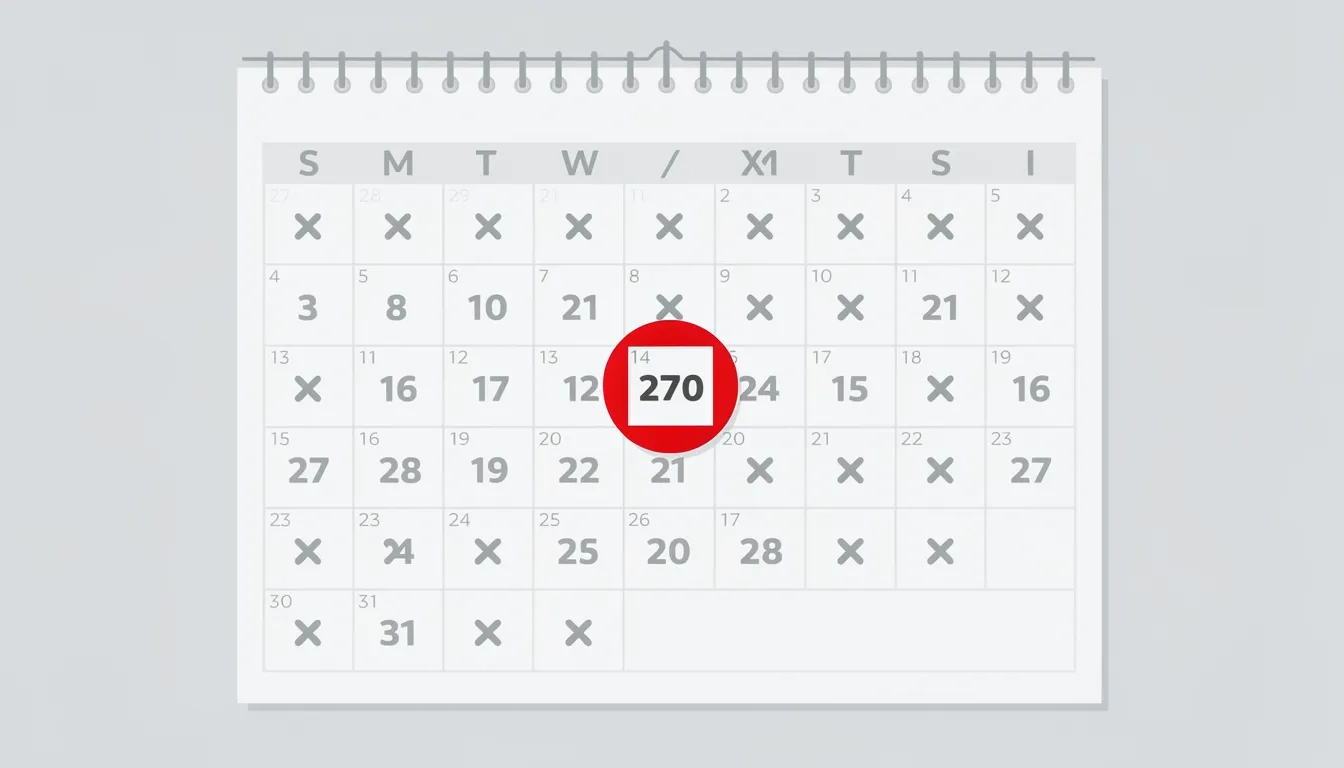
Federal student loan default isn't the moment you miss a payment. It's what happens 270 days later.
Miss a payment and you're delinquent. At 90 days, your servicer reports that delinquency to the credit bureaus. At 270 days — nine months of missed payments — you've crossed into default, and everything changes at once.
The acceleration clause activates the moment you cross that line. Your entire unpaid principal and interest balance becomes immediately due. Not just the past-due installments. All of it. That clause is buried in federal promissory notes that most borrowers signed at 18 and never read again.
You also immediately lose eligibility for more federal student aid — Pell Grants, federal loans, campus-based aid — along with deferment, forbearance, and every loan forgiveness program including Public Service Loan Forgiveness. Gone in a single day.
The Consequences: What Hits and When
The federal government has collection tools that private creditors spend years in court trying to get. With defaulted federal student loans, the Department of Education can move against you administratively, without ever filing a lawsuit.
Wage garnishment kicked back into gear in January 2026 after a five-year pause. The DOE can instruct your employer to withhold up to 15% of your disposable pay each paycheck, no court order required. Federal law does require they leave you at least $217.50 per week (30 times the federal minimum wage), but for someone earning $52,000 a year, that still means roughly $487 per month disappearing before it reaches your bank account.
Borrowers must receive at least 30 days' written notice before garnishment starts, and they do have the right to request a hearing to challenge the amount or claim financial hardship. According to debt attorney Ashley Morgan, quoted in Fortune's January 2026 coverage, the single most important thing is opening every letter — most borrowers miss appeal windows because they avoid the mail.
The Treasury Offset Program seizes tax refunds. You file your return, expect a check, get a letter. The IRS reroutes your refund directly to the loan balance. Social Security benefits can be offset too, though federal law mandates a $750 per month floor. That rule does not help people living on $800 a month in disability payments — it essentially takes everything above a subsistence level.
Collection fees get piled on top of the original balance: loan collection fees, Treasury processing fees, and legal costs if the debt moves to litigation. The balance doesn't stay static while collections proceed.
The Credit Score Reality
Between mid-2024 and late 2025, the average borrower who defaulted on student loans lost 91 points from their credit score, according to the New York Fed's analysis published in May 2026. That pulled average scores from 567 down to 476.
Those numbers deserve some context. A 567 credit score is already below the "fair" threshold — that's the starting point, before the 91-point drop. At 476, you're in territory where auto loans carry interest rates in the high teens, most apartment rental applications get flagged or rejected outright, and employers in financial services, healthcare, and government who run credit checks will notice immediately.
The default notation remains on your credit report for seven years from the original default date. Loan rehabilitation (covered below) can remove it ahead of that timeline. Loan consolidation cannot.
TransUnion's April 2025 snapshot found that about 5.8 million federal student loan borrowers were at least 90 days delinquent — the highest delinquency rate the agency had recorded since it began tracking student loan data in 2012.
Who's Actually Defaulting Right Now
The image of a student loan defaulter as a recent grad with an unmarketable degree doesn't match the data. The picture is more complicated, and more sympathetic.
The average age of a borrower who defaulted after pandemic-era repayment resumed was 38.9 years, per the New York Fed. Over 75% of them had been current on their loans in 2019. They didn't spend a decade failing to manage debt — most of them managed fine until the repayment system changed underneath them.
The Bipartisan Policy Center identified a particularly damaging fact: over 40% of borrowers returned to repayment facing a different loan servicer than the one they had before March 2020. New website, new login portal, new phone number, new processes. Borrowers who had set up autopay under their old servicer found that setup had evaporated. Some missed the 270-day window simply because the communication chain broke.
"Policymaking through executive action and litigation has led to partisan activities with no durable fixes." — Bipartisan Policy Center, 2025
That's the situation in plain language. Five years of legal battles over forgiveness programs and repayment plan rules created a system where borrowers couldn't get clear answers about what they owed or how to pay it. The Department of Education even temporarily disabled income-driven repayment applications in early 2025, blocking annual income recertification during legal proceedings.
Geographically, defaults cluster in the South. Louisiana, Mississippi, Alabama, Georgia, and South Carolina each had default rates exceeding 10% of borrowers — patterns tied to income levels and the labor market outcomes of higher education in those regions.
The Two Paths Out of Default
Once you're in default on federal student loans, two official mechanisms exist to resolve it: loan rehabilitation and loan consolidation. They work differently, move at different speeds, and affect your credit history in completely different ways.
Start by contacting the Default Resolution Group at 1-800-621-3115. That's the DOE's primary intake line for borrowers in default on loans held by the department. Expect hold times.
Loan Rehabilitation
Rehabilitation requires nine consecutive monthly payments, each received within 20 days of the due date. Your monthly payment amount is calculated based on household income and expenses — the statutory floor is $5 per month, though most borrowers pay more once income is factored in.
The payoff: the default notation is removed from your credit report after you complete the nine payments. Not marked as "paid in full" or "resolved." Physically removed from the record. That's the only way to undo the credit reporting impact before the seven-year clock runs out.
The limitations matter. Rehabilitation is a one-time option per loan — default again and you cannot rehabilitate that same loan a second time. Missing a single payment resets the counter to zero with no credit given for previous months.
Loan Consolidation
Consolidation creates a new Direct Consolidation Loan that pays off your defaulted loans. The original loans close as satisfied; the new loan is issued in current, non-default status. The whole process typically takes four to six weeks.
To consolidate out of default, you must either agree upfront to repay under an income-driven repayment plan, or make three consecutive on-time payments on the defaulted loan before applying. The speed is the main advantage.
The cost: the default stays on your credit report for seven years from the original default date. Consolidation eliminates the legal and financial consequences — garnishment stops, your federal aid eligibility returns, you can access forbearance again — but the credit history doesn't change.
Rehabilitation vs. Consolidation: The Decision Framework
| Factor | Rehabilitation | Consolidation |
|---|---|---|
| Time to exit default | ~9 months | 4–6 weeks |
| Removes default from credit report? | Yes | No |
| Income-based payment available? | Yes | Only with IDR agreement |
| Available more than once per loan? | No | Yes |
| Wage garnishment stops? | Yes, once payments begin | Yes, once complete |
| Restores federal aid eligibility? | Yes | Yes |
The right call depends on two things: how urgently you need collections to stop, and how much the credit history matters to you over the next several years.
If garnishment just started and you need it stopped in weeks rather than months, consolidation is faster. If you're planning to apply for a mortgage, lease an apartment, or change jobs in the next few years — and credit checks will be part of those processes — rehabilitation's credit report benefit is worth the nine months.
For most borrowers, rehabilitation is the better long-term choice. A 91-point credit score deficit shows up every time you finance a car, renew a lease, or apply for a job with a financial background check component. Nine months of income-based payments to remove that notation is usually a better trade than waiting seven years for it to age off.
If You Haven't Defaulted Yet, Act Now
At 90 days delinquent, the situation is uncomfortable but recoverable without the full weight of default landing on you.
Income-driven repayment plans can reduce your monthly payment to zero dollars for borrowers below a certain income threshold — specifically, those earning less than 225% of the federal poverty guideline. A $0/month IDR payment still counts as an on-time payment, keeps you out of default, and counts toward eventual forgiveness. Applications go through studentaid.gov (check current portal status, as IDR applications were suspended temporarily in early 2025 during court proceedings).
Deferment and forbearance are stop-gap options, not solutions. Economic hardship deferment, unemployment deferment, and general forbearance can legally pause payments without triggering default. Interest may accumulate during some of these periods — but accumulated interest is a manageable problem compared to wage garnishment notices hitting your HR department.
Call your loan servicer before that 270th day. The call is uncomfortable. The alternative is considerably worse.
Life After Default: Credit Rebuilding and What Comes Next
Once you exit default through rehabilitation or consolidation, your access to federal loan benefits fully restores. Income-driven repayment plans, deferment, forbearance, and loan forgiveness eligibility — including Public Service Loan Forgiveness for qualifying public service workers — all come back. If you want to return to school, your federal student aid eligibility is restored.
Credit rebuilding after default takes time regardless of which exit path you used. On-time payments across all other accounts do more for your score than anything else. A secured credit card (one where you put down a deposit that becomes your credit limit) used lightly and paid in full monthly builds positive history. Being added as an authorized user on a responsible family member's account can help while the default notation ages out.
The borrowers who struggle most after exiting default are the ones who go right back to the same monthly payment amount that caused the original default. If the standard 10-year payment was unmanageable before, it'll be unmanageable again. Enroll in an IDR plan immediately after exiting default and set your payment at a level you can actually sustain through income fluctuations.
One thing worth knowing: starting in 2027, federal law will allow borrowers to rehabilitate a defaulted loan a second time — a change from the current one-chance-per-loan rule. That doesn't mean the first default is consequence-free, but it does close a gap that previously left re-defaulted borrowers with no rehabilitation option at all.
Bottom Line
- Default happens at 270 days — at that point, your entire balance accelerates, wage garnishment can begin (up to 15% of disposable pay), and tax refunds get seized automatically.
- Rehabilitation takes nine months but removes the default from your credit report permanently. It's the right choice for most borrowers who aren't facing immediate, acute garnishment hardship.
- Consolidation resolves default in four to six weeks but leaves the default on your credit report for seven years. Use it when speed matters more than credit history.
- If you're delinquent but not yet in default, an income-driven repayment plan (IDR) may bring your required payment to zero dollars while keeping you out of default.
- After exiting default, enroll in IDR immediately — returning to the same unaffordable payment is what causes re-default.
Frequently Asked Questions
Does student loan default go away on its own?
No. A default notation stays on your credit report for seven years from the date of default, and the debt itself doesn't disappear — it can be collected indefinitely through wage garnishment, tax offset, and Social Security offset. The only ways to resolve it are rehabilitation, consolidation, or (in rare circumstances) a successful legal challenge.
Can I stop wage garnishment after it starts?
Yes. Entering a rehabilitation agreement or completing a consolidation application will stop administrative wage garnishment — rehabilitation pauses it once you begin making payments; consolidation stops it once the new loan is issued. You also have the right to request a hearing within 30 days of receiving the garnishment notice to challenge it on financial hardship or other grounds.
Is loan rehabilitation worth it if I've already been in default for years?
Usually yes, particularly if you have any borrowing you'll need to do in the next few years — car loans, housing, refinancing. The credit report removal that comes with rehabilitation is the same whether you complete it at year one of default or year five. The seven-year clock resets from the date of original default, not from when you start rehabilitation, so moving quickly does matter.
Can private student loans garnish wages without going to court?
No. This is a meaningful difference from federal loans. Private lenders must obtain a court judgment before they can garnish wages or seize assets. That process takes months to years and gives borrowers more time to negotiate settlements or repayment arrangements. Federal student loans operate under administrative authority that bypasses the court system entirely.
What's the difference between delinquency and default?
Delinquency is any missed payment — it starts the day after a payment is due and not received. It damages your credit once it's reported at 90 days. Default is the legal status you reach at 270 days of non-payment, which triggers acceleration of the full balance, loss of federal aid eligibility, and the government's collection tools including wage garnishment and tax offset.
What happens to student loan default if I file for bankruptcy?
Student loans — both federal and private — are extremely difficult to discharge in bankruptcy. You must file a separate adversary proceeding and prove "undue hardship" under a legal standard that most courts apply very narrowly. Very few borrowers succeed. Bankruptcy does not automatically stop student loan collections the way it pauses most other debt collection, and filing typically doesn't affect the default status or credit reporting timeline.
Sources
- Federal Student Loan Defaults Return After Pandemic Pause – NY Fed Liberty Street Economics
- Student Loan Default: How Policy and Politics Are Failing Borrowers – Bipartisan Policy Center
- Student Loan Borrowers: Wage Garnishment Who Is Affected and How Much They Can Take – Fortune
- U.S. Department of Education to Begin Federal Student Loan Collections – ED.gov
- A Fresh Start for Federal Student Loan Borrowers in Default – Federal Student Aid
- On the Edge of a Default Cliff: New Survey Shows Student Loan Borrowers Are Struggling – TICAS