Illinois Property Tax Relief for 2026: Exemptions That Actually Help
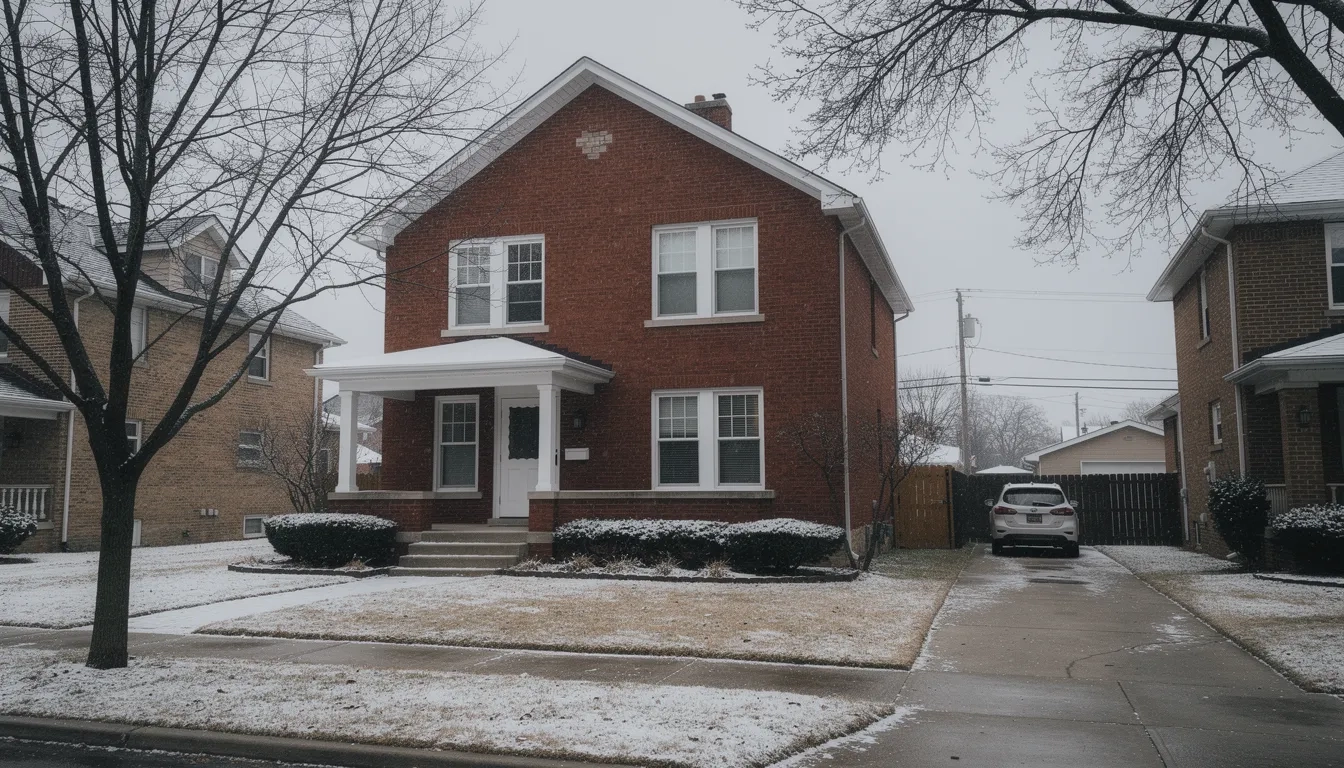
Cook County's property tax bills climbed again this year. Not a little — 5.34%, county-wide, on top of increases every single year since the early 1990s. If you own a home in Illinois and that number doesn't make your stomach drop a bit, you probably haven't opened your tax bill lately.
Here's the thing nobody tells you at closing: Illinois has real, legally guaranteed property tax relief programs, and most homeowners either don't know they exist or assume they're already enrolled when they aren't. Some of these exemptions renew themselves. Others require you to raise your hand every year, in writing, or you lose them. Getting that distinction wrong costs real money.
The General Homestead Exemption: Everyone's Starting Point
Every owner-occupied home in Illinois qualifies for the General Homestead Exemption, and it's the baseline nearly every other program builds on. It doesn't cut your tax bill directly. Instead it shrinks your home's equalized assessed value (EAV) — the number your tax rate actually gets applied to.
The exemption amount depends on where you live. Cook County homeowners can shave up to $10,000 off their EAV; DuPage, Kane, Lake, McHenry, and Will counties (the collar counties) top out at $8,000; everywhere else in Illinois, it's capped at $6,000. The actual reduction is based on how much your EAV has grown since 1977, up to that county's max — a strange artifact of 1970s tax law that nobody's bothered to update.
Say your home's EAV rose from $15,000 to $45,000 since that baseline year. In Cook County you'd get the full $10,000 knocked off, landing you at $35,000 taxable EAV. Multiply by your local tax rate and that's your real savings — usually somewhere between a few hundred and just over a thousand dollars a year, depending on your township.
The exemption reduces assessed value, not your tax bill dollar-for-dollar. That single misunderstanding is behind most of the "why didn't my bill go down more" phone calls to county assessor offices every fall.
Worth flagging: legislators in Springfield have floated bills (HB1746, SB1501 among them) to make this exemption a flat $10,000 everywhere in Illinois, collar and downstate counties included. As of now that hasn't become law — the tiered system above is still what applies for 2026.
Senior Citizens Homestead Exemption and the Senior Freeze
Age adds a second layer of relief, and this is where people genuinely leave money on the table.
The Senior Citizens Homestead Exemption
Turn 65, and you qualify for an additional reduction on top of the general one: up to $8,000 of EAV in Cook County, up to $5,000 elsewhere in the state. You don't have to be retired — plenty of working seniors qualify, and the exemption doesn't care what your income is. In Cook County, once it's on file, it automatically renews every year without you lifting a finger.
The Senior Freeze (Low-Income Senior Citizens Assessment Freeze)
This is the heavyweight program, and also the one people misread most often. If you're 65 or older with total household income at or below $75,000 for tax year 2026 (rising to $77,000 in 2027 and $79,000 in 2028 and after), your home's EAV gets frozen at its current level going forward. Your assessed value stops climbing even if the market value of your house keeps rising.
It does not freeze your actual tax bill. Local governments can still raise rates, and your bill can still go up even with a frozen EAV — a distinction that trips up a lot of seniors who call their township office convinced something's broken.
And unlike the regular senior exemption, the Freeze does not auto-renew in most cases. You file a new PTAX-340 application every year, and missing that window is one of the single most common reasons seniors lose a benefit worth thousands over a decade.
| Program | Typical Benefit | Who Qualifies |
|---|---|---|
| General Homestead Exemption | Up to $10,000 EAV (Cook), $8,000 (collar counties), $6,000 (other counties) | Any owner-occupied primary residence |
| Senior Citizens Homestead Exemption | Up to $8,000 EAV (Cook), $5,000 (other counties) | Homeowner age 65+, no income limit |
| Senior Freeze (Assessment Freeze) | Freezes EAV at current level (savings grow over time) | Age 65+, household income ≤ $75,000 (2026) |
| Home Improvement Exemption | Up to $75,000 of added value exempted for 4 years | Any homeowner who completes qualifying improvements |
Why Cook County Plays by Different Rules
Downstate Illinois reassesses property values every four years. Cook County does it on a three-year rotation, one-third of the county at a time — Chicago in 2024, the north and northwest suburbs in 2025, and the south and west suburbs in 2026. That staggering is why your neighbor two towns over might see a wildly different jump in the same year you barely notice a change.
Assessor Fritz Kaegi's office has also split how exemptions behave once they're on file. The Homeowner Exemption (Cook's name for the General Homestead Exemption) and the regular Senior Exemption both auto-renew annually. The Senior Freeze does not — it's a deliberate carve-out tied to income verification, since eligibility can shift year to year in ways ownership status doesn't.
Cook County also runs a Home Improvement Exemption that shields up to $75,000 of added value from a renovation for four years, applied automatically once the Assessor's office field-checks a building permit — no application needed in most cases. Combine a triennial cycle with three different renewal rules for three different exemptions, and it's no wonder Cook County generates more assessment confusion than the other 101 counties combined.
How and When to Apply — or Renew
Timing varies by county, which is genuinely annoying if you've moved within Illinois and assumed the rules traveled with you.
- New homeowners: file your initial General Homestead and Senior exemption applications with your county assessor's office — most counties open filing windows in the spring.
- Cook County residents: exemption applications (and renewals for the Senior Freeze) typically open in February or March; check the specific dates on the Assessor's website each year, since they shift.
- Downstate counties: many require the PTAX-340 for the Freeze annually regardless of whether you're in Cook County, and some, like Moultrie County, set a March 31 deadline.
- Missed a deadline? Most counties allow a Certificate of Error application later in the year to retroactively claim an exemption you were otherwise eligible for — it's not automatic, but it exists.
If you sold your home and bought a new one anywhere in Illinois, none of your old exemptions transfer. New deed, new parcel number, new application — full stop.
If Your Assessment Looks Too High: Appeals
Exemptions reduce what you owe on a given assessment. They don't fix an assessment that's wrong in the first place, and in Cook County, wrong assessments happen constantly during reassessment years.
There's no single countywide appeal deadline. Each of Cook's 38 townships gets its own roughly 30-day filing window with the Assessor, staggered across the year as the triennial reassessment rolls through, and missing your township's window means waiting until next year. If a letter arrived from the Assessor's office, the filing deadline is printed on the last page.
A decent rule of thumb: if your new assessed value jumped more than the typical increase for your area (double digits when the neighborhood averaged single digits, say), or your home has damage or defects the county clearly didn't account for, it's worth filing. Pull three to five comparable sales nearby, sold before January 1 of the assessment year, and let those numbers do the arguing — assessors and the Board of Review respond to evidence, not frustration.
Common Mistakes That Cost Homeowners Real Money
Most of the errors here aren't complicated. They're just easy to miss because Illinois's system rewards attention to detail and punishes autopilot.
- Assuming the Senior Freeze auto-renews. It usually doesn't. Confusing it with the Senior Citizens Homestead Exemption, which does, is the single most common and costly mix-up in this whole system.
- Not reapplying after a life event. Refinancing, adding a spouse to the deed, moving a trust — any of these can quietly knock you off the renewal list until you file again.
- Believing the Freeze locks in your whole tax bill. It locks the assessed value, not the rate. Bills can still climb.
- Skipping the appeal because "exemptions already lowered it." Exemptions and a fair assessment are two separate problems, and only one of them you can appeal.
- Not knowing which county tier you fall under if you moved from Cook to a collar county (or vice versa) — the exemption caps aren't the same, and neither, often, is the filing deadline.
Bottom Line
- File your General Homestead and Senior Citizens Homestead exemptions the moment you're eligible — one is automatic once approved in Cook County, but neither happens without that first application.
- If you're 65+ and near the $75,000 income line for 2026, apply for the Senior Freeze every single year through PTAX-340 and mark next spring's deadline now.
- Don't confuse a frozen assessed value with a frozen tax bill — local tax rates are a separate lever entirely, and they keep moving.
- Watch your township's appeal window if you're in Cook County's 2026 reassessment wave (south and west suburbs); a missed 30-day filing period means no appeal until the next cycle.
- When your county assessor's exemption renewal notice arrives, actually open it — the paperwork that seems like junk mail is often the thing standing between you and a few hundred or a few thousand dollars.
Frequently Asked Questions
Does the Senior Freeze exemption freeze my entire property tax bill?
No, and this is the most common misconception homeowners have about it. The Freeze locks in your home's equalized assessed value, but local tax rates set by school districts, municipalities, and other taxing bodies can still rise, which can push your bill up even with a frozen EAV.
How do I actually apply for these exemptions in Illinois?
Contact your county assessor's office (in Cook County, the Assessor's website has online filing) and submit the relevant application — the General and Senior Citizens Homestead exemptions usually need a one-time initial filing, while the Senior Freeze requires the PTAX-340 form annually. Filing windows generally open in late winter or early spring, so check your specific county's calendar each year.
I'm 65 but still working. Do I still qualify for senior exemptions?
Yes. Employment status has nothing to do with eligibility for the Senior Citizens Homestead Exemption — only your age and ownership status matter. The Senior Freeze is different since it's income-capped, so working seniors need to stay under the $75,000 threshold for 2026.
What happens if I miss my exemption renewal deadline?
Most Illinois counties, including Cook, allow you to file a Certificate of Error application later in the year to retroactively claim an exemption you missed. It's a real fix, but it's extra paperwork you wouldn't need if the renewal had gone in on time.
Why does Cook County reassess property differently than the rest of Illinois?
Cook County uses a triennial cycle, reassessing one-third of the county each year (Chicago, then north suburbs, then south and west suburbs), while most downstate counties reassess every four years. That staggered rotation is why assessment jumps and appeal windows land at different times depending on which part of the county you're in.
Can I stack the General Homestead and Senior Citizens exemptions together?
Yes, and you should. They apply to the same EAV independently, so a Cook County senior can claim the $10,000 General Homestead reduction and the $8,000 Senior Citizens reduction in the same tax year, plus the Senior Freeze if income-eligible — that stacking is exactly how the system is designed to work.
Sources
- Low-Income Senior Freeze Exemption - Cook County Assessor's Office
- Home Improvement Exemption - Cook County Assessor's Office
- At Long Last... Illinois Homestead Exemption to Increase in 2026 - DuPage County Bar Association
- Total of Cook County property taxes billed goes up for the 32nd straight year - Chicago Sun-Times
- Cook County Property Tax Appeal Deadline 2026 - Ownwell
- There's a Homestead Exemption for That - Illinois CPA Society
- Illinois Property Tax Freeze Program: Who Qualifies and Why Some Seniors Get Denied