Grants for Art and Music Students: What's Actually Available
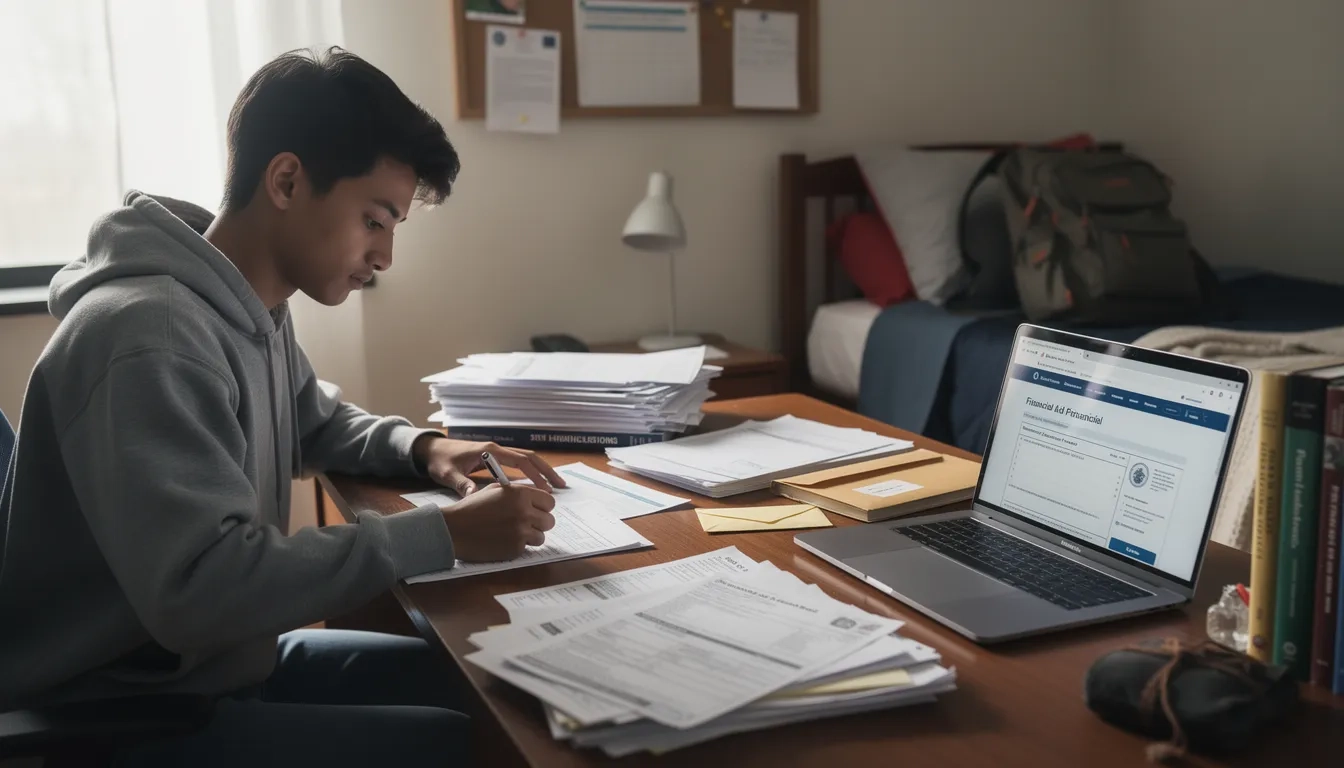
No federal grant exists specifically for art or music majors. Zero. Yet arts students compete for hundreds of millions of dollars in private foundation money, state arts council programs, and institutional awards that go unclaimed every year — because students never look past FAFSA. This guide covers what's actually out there, what the eligibility fine print says, and how to build a grant strategy that doesn't waste your time.
The Federal Foundation: What the Government Actually Offers
The Pell Grant is not an arts grant. It's a need-based federal award open to any undergraduate who qualifies financially, regardless of major. For 2025-2026, the maximum award is $7,395. Studying painting or trombone doesn't disqualify you, but it doesn't help you either. Your Expected Family Contribution and enrollment status determine everything.
Two other federal programs matter for creative students specifically:
- Federal TEACH Grant: Up to $4,000 per year. You must commit to teaching a high-need subject at a low-income school after graduation. Art and music education qualify as high-need in many states. If you plan to teach anyway, this is real money. If you don't follow through, it converts to an unsubsidized loan — which turns a grant into debt.
- Jacob J. Javits Fellowship Program: This one actually names the arts. Graduate students in visual arts, music, film, theater, and creative writing are all eligible. Award amounts vary by financial need and funding availability, and the competition includes humanities and social science students too.
The honest takeaway is that federal aid treats creative majors identically to every other field. Arts-specific funding lives almost entirely in the private sector.
Private Foundation Grants for Visual Artists
Private foundations are where the arts-specific money concentrates, and most students skip them because the applications are harder than filling out FAFSA.
The Elizabeth Greenshields Foundation is one of the most accessible grants for visual artists. It awards $15,000 CAD to artists 18 and older working in representational styles — drawing, painting, printmaking, or sculpture. International applicants are welcome, which is rare. But it explicitly rejects abstract work, digital art, and commercial design. If your portfolio runs conceptual or screen-based, this grant is not for you.
The Scholastic Art and Writing Awards have distributed more than $30 million to young artists since the program launched. Individual awards reach up to $12,500. The program targets high school students specifically, making it both a grant and a credential-builder that helps every subsequent application.
| Grant | Amount | Eligible Students | Key Restriction |
|---|---|---|---|
| Elizabeth Greenshields Foundation | $15,000 CAD | Visual artists 18+, international | Representational work only |
| Scholastic Art & Writing Awards | Up to $12,500 | High school students | K-12 enrollment required |
| YoungArts | Up to $10,000 | Ages 15-18, all arts disciplines | Age cutoff at 18 |
| CINTAS Visual Arts Fellowship | Up to $25,000 | Cuban heritage artists | Heritage requirement |
| Doodle for Google | $30,000 + $50K tech | K-12 students | One national winner only |
The CINTAS Visual Arts Fellowship (up to $25,000) is worth studying not just for the amount but for the pattern. Heritage-based and identity-specific grants consistently attract smaller applicant pools than open national competitions. If you qualify for niche eligibility criteria, your statistical odds improve considerably. The competition for a general fine arts grant can be brutal. A grant reserved for artists of Cuban heritage? Entirely different math.
YoungArts finalists also become eligible for U.S. Presidential Scholars in the Arts selection. That credential shows up on every grant application and residency submission for the next decade.
Music-Specific Grants and Scholarships
Music students have access to a distinct set of private programs that most financial aid advisors know nothing about.
The ASCAP and BMI foundations both run competitive awards for student musicians and composers, but neither operates like a standard online application. Both have nomination-based components. You typically need a faculty referral or institutional connection before you can access them — cold submissions usually don't make it past the screening stage. Outreach before applying isn't optional; it's the entry point.
The John Lennon Scholarships support original songwriters ages 17-24. The deadline is January 15 each year. Because the award specifically targets composition, it fits singer-songwriters and music producers better than performers or music education majors. Check fit before investing weeks on the application.
Other programs worth adding to your list:
- Chopin Foundation of the U.S.: Ten renewable $1,000 scholarships for pianists ages 14-17. Deadline: May 15.
- National Federation of Music Clubs: Multiple awards covering instrumentalists, vocalists, and composers across age groups.
- Mario Lanza Institute Scholarship: Vocal students ages 21-28, with audition requirements.
- Jack Kent Cooke Young Artist Award: Classical musicians with both high achievement and demonstrated financial need. The foundation built this specifically around the insight that talented musicians from lower-income families can't access private lessons, quality instruments, or summer intensives — and that gap compounds over time.
"Several small scholarships can add up to a significant chunk of tuition costs." — MajoringInMusic.com
This is exactly what most students miss. They're hunting for a single $20,000 prize and ignoring eight $1,000 scholarships they could actually win.
Grant Strategy: How to Apply (and Actually Win)
Research across scholarship databases shows that 68% of scholarship funding targets criteria beyond academics and athletics. Most successful applicants narrow their focus to 5-7 grants that align tightly with their creative profile, rather than applying broadly.
Portfolio alignment matters more than portfolio strength. A solid body of representational figure work is a strong submission for the Elizabeth Greenshields Foundation and nearly irrelevant for a grant focused on experimental digital media. Judges evaluate fit as much as quality.
Some grants are invitation-only. The ASCAP Foundation and D'Addario Foundation (which funds school music education programs) both require preliminary outreach before formal submission. The D'Addario Foundation also explicitly avoids instrument purchases, preferring long-term structural support for programs. Students who submit equipment proposals get rejected at the screening stage. The guidelines aren't suggestions.
Here's a practical approach to building your grant list:
- Write down every characteristic that makes you eligible: state of residence, cultural heritage, specific instrument or medium, grade level, career goal.
- Run each characteristic separately through grant databases like Fastweb, Scholarships.com, your state arts council's website, and ArtProf's grant list.
- Sort results by deadline, prioritizing September-through-February windows — late spring is the most crowded application period.
- Before writing each application, read the funder's stated priorities and align your artist statement to what they specifically value.
I'll say this plainly: the students who win arts grants are usually not the most talented applicants. They're the most prepared. A clean, well-matched application from a solid artist beats a sloppy one from a brilliant artist nearly every time.
Mistakes That Cost Students Money
The Mockingbird Foundation (which funds school music programs) reports that fewer than 1% of grant requests get approved. That's not evidence that arts funding is scarce. It's evidence of mismatched applications at scale.
Applying without reading funder priorities is the single most common failure. The D'Addario Foundation says it avoids instrument purchases. Students submit instrument proposals anyway. The result is instant rejection before anyone evaluates the work itself.
Three patterns show up constantly in failed applications:
- Submitting a portfolio that doesn't match the grant's aesthetic requirements (abstract digital work to the Elizabeth Greenshields Foundation, for example)
- Not realizing the grant targets institutions or nonprofits, not individual students
- Waiting until senior year — many of the best student-specific programs cut off at age 18 or explicitly favor early undergraduates
State arts council funding is the elephant in the room. Every state has an arts council and most run programs for emerging artists, including students. The assumption that these are for working professionals only costs students real money every year. They're not professionals-only, and they're chronically underapplied to.
A Timeline for Building Your Grant Portfolio
High school (grades 9-12): Target Scholastic Art & Writing Awards, YoungArts, and the Doodle for Google competition. These aren't just prizes — they're credentials that make every future application stronger.
First year of college: File FAFSA on October 1 (the earliest it opens each year). Talk to your department's financial aid contact, not just the general office. Many institutional scholarships go unclaimed because students don't know to ask.
Sophomore and junior year: Pursue faculty-recommended programs like the ASCAP and BMI foundations. Apply to your state arts council. The John Lennon Scholarships and Chopin Foundation programs are realistic targets at this stage.
Senior year and graduate school: The Jacob J. Javits Fellowship is designed for graduate creative arts students. Elizabeth Greenshields Foundation fits post-undergrad visual artists well. The Princess Grace Foundation Awards cover theater, dance, and film — but these require nomination through your institution, so talk to your department chair well before any application deadline.
Bottom Line
- File FAFSA every October, regardless of what you expect to receive. The Pell Grant (up to $7,395) and most institutional aid require it.
- Search your niche characteristics first: heritage, geography, specific instrument or medium, career track. Smaller, targeted grants have better odds than open national competitions.
- Stack smaller awards. Four $1,000 scholarships cover a semester of in-state tuition at many public universities — don't dismiss them.
- Read funder priorities before applying. Mismatched applications are the single most fixable problem in arts grant seeking.
- Start in high school. Scholastic Art & Writing Awards and YoungArts generate credentials that compound. The students winning major grants at 22 usually started building their track record at 16.
Frequently Asked Questions
Are there federal grants reserved specifically for art or music students?
No. The federal government doesn't set aside any grants exclusively for creative majors. Pell Grants and TEACH Grants go to eligible students regardless of field. The Jacob J. Javits Fellowship comes closest — it targets graduate students in arts and humanities by name — but it competes across literature, history, and social science too. Arts-specific funding comes primarily from private foundations and state arts councils.
Do I need professional experience to apply for arts grants?
It depends on the grant. Many prestigious awards like the Guggenheim Fellowship require 20 or more years of professional work and exclude current students entirely. But the Elizabeth Greenshields Foundation, Scholastic Art & Writing Awards, YoungArts, and John Lennon Scholarships are all designed for early-career and student applicants. Always check the stated eligibility before investing time in an application.
Can high school students really apply for arts grants?
Yes, and they should start earlier than they think. Several of the most valuable grants are exclusively for high school students. YoungArts accepts applicants ages 15-18. Scholastic Art & Writing Awards serves grades 7-12. Doodle for Google targets K-12. Waiting until college means missing these windows entirely — and losing the credential history that makes future applications more competitive.
What's the difference between an arts grant and an arts scholarship?
Functionally, both are money you don't repay. Scholarships are usually merit or need-based awards disbursed through academic institutions. Grants are typically awarded by external organizations — foundations, government programs, corporations — based on proposals, artistic achievement, or financial need. The application process differs, but the result is the same: support that doesn't become debt.
How do I find grants specific to my instrument or art form?
Start with your state arts council (search "[state name] arts council grants"). Then look at discipline-specific organizations: the Chopin Foundation for pianists, the Mario Lanza Institute for vocalists, the ASCAP Foundation for composers. ArtProf.org maintains an updated list of visual art grants organized by medium. Scholarships.com has searchable databases for both art and music awards filterable by discipline.
Why do so few arts grant applications succeed?
Mismatched applications, overwhelmingly. The Mockingbird Foundation accepts fewer than 1% of requests — not because standards are impossibly high, but because most submissions don't align with what the foundation actually funds. D'Addario doesn't fund instrument purchases. ASCAP doesn't accept cold submissions. Reading eligibility criteria and funder priorities before writing a single word of your application is the highest-leverage thing you can do.
Sources
- Grant Opportunities for Students Studying the Arts — CollegeScholarships.org
- Scholarships for Music Majors — MajoringInMusic.com
- Artist Grants — ArtProf.org
- 10 Music Education Grants You Can Apply For — Solfeg.io
- Financial Aid for Art School — AllArtSchools.com
- 11 Fine Arts Scholarships for Creative Students — Kollegio.ai
- Federal Pell Grant — StudentAid.gov