Florida Property Tax Relief: Every Exemption for 2026
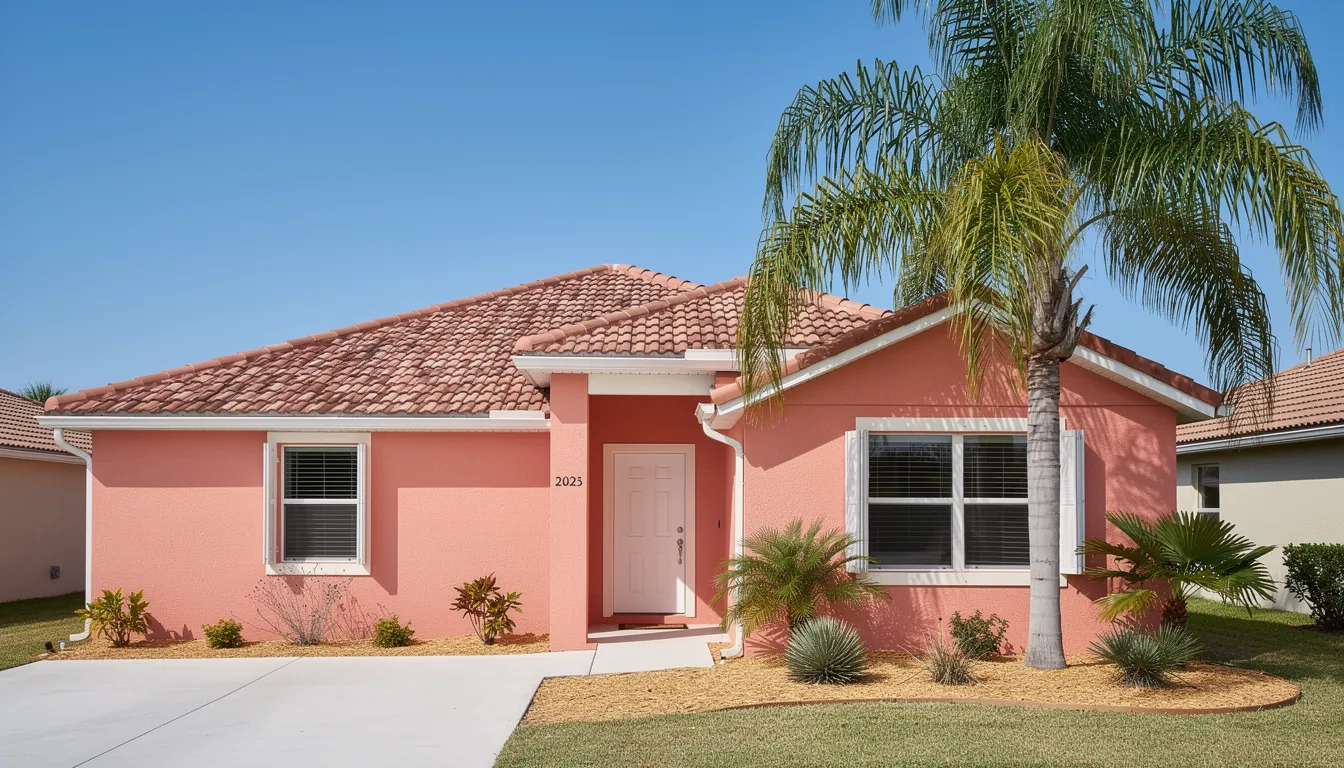
A Fort Myers homeowner I read about recently found out, three years into owning her house, that she'd never filed for homestead. Nobody at closing mentioned it. She'd been paying full freight the whole time on a house that qualified for thousands off her taxable value.
That's the quiet trap in Florida's property tax system. The relief is genuinely good, but almost none of it happens without paperwork.
The Homestead Exemption Is Your Foundation, Not a Freebie
Every Florida homeowner who uses a property as their permanent residence on January 1 can claim the homestead exemption. It removes $25,000 from your home's assessed value for all property taxes, including school taxes, and a second $25,000 for the portion of your assessed value between $50,000 and $75,000, though that second slice skips school levies.
So the ceiling on the standard exemption is $50,000 off assessed value, not market value. On a home assessed at $300,000, that's real money: roughly $500 to $1,000 a year depending on your county's millage rate.
Here's the misconception that costs people the most: homestead exemption is not automatic. Even if the county mailed you a homestead card last owner's tax bill, a new owner has to file fresh with the county property appraiser. Buy a house in June, and you still must apply by the following March 1 to get anything for that tax year.
A few qualifying rules trip people up:
- You need Florida residency evidence: driver's license, voter registration, or vehicle registration switched to the Florida address
- The home must be your permanent residence, not a rental or a second home you visit each winter
- Only one homestead exemption per family unit, even if spouses own separate properties
Once approved, it renews automatically each year unless you sell, rent the place out, or stop living there as your primary residence.
The Save Our Homes Cap Is Where the Real Savings Compound
This is the part most articles skate past, and it's the part that actually matters over time. Save Our Homes caps the annual growth in your home's assessed value at 3%, or the Consumer Price Index, whichever is lower, regardless of how much your home's market value jumps.
Buy a house in a hot Tampa suburb, watch its market value climb 12% in a single year (it happens), and your taxable assessed value still only rises by that 3% ceiling. Over a decade, the gap between market value and assessed value can become enormous.
Long-time owners in Miami-Dade or Sarasota routinely pay taxes on an assessed value less than half of what the home would fetch on the open market.
The cap only starts working the year after you first qualify for homestead. Your first year's assessment is set at full market value — the discount builds from there.
That timing detail matters for a decision framework: if you're weighing whether to buy now versus wait, remember the clock on your Save Our Homes benefit doesn't start until January 1 following your homestead filing. Buying in December instead of February can cost you a full year of compounding protection.
The tradeoff nobody advertises: this system quietly punishes people who move. Sell your long-held homestead and buy a new one, and without taking the next step, your new home gets reassessed at full market value on day one.
Portability Lets You Carry the Savings to a New Home
Florida fixed the moving problem with portability, and it's genuinely one of the more homeowner-friendly rules in the country. You can transfer up to $500,000 of your accumulated Save Our Homes benefit from your old homestead to a new one anywhere in Florida, as long as you establish the new homestead within three years of giving up the old one.
Say your old home had a market value of $450,000 but an assessed value of $200,000 thanks to years of the 3% cap. That $250,000 differential can follow you to your next house, according to the Palm Beach County Property Appraiser's portability guidance. Your new place gets a discount from day one instead of starting over at full value.
Downsizing works too, just proportionally. If you move to a cheaper home, you still bring a percentage of your accumulated benefit. You don't lose it just because the new place costs less.
Most homeowners never file the separate portability form (DR-501T) alongside their new homestead application. Skip it, and the county has no way to know you're entitled to the transfer. It isn't calculated for you automatically.
Senior, Disability, and Veteran Exemptions Stack on Top
Base homestead is just the entry point. Several additional exemptions layer on for specific homeowners, and Florida lets many of them combine.
Senior Exemptions
Counties and cities may (but aren't required to) adopt an additional exemption for homeowners 65 and older whose household income falls under a state-set threshold, adjusted annually for inflation: $38,686 for the 2026 exemption year, based on prior-year income. Where adopted, this can knock off up to another $50,000 of assessed value.
A separate, less-known long-term senior exemption exists too: homeowners 65+ who've lived in the same homestead for at least 25 years, with a home value under a set cap, can qualify for a full exemption from certain non-school taxes in counties that adopt it. Not every county does. Check with your local property appraiser before assuming it applies.
Disability and Veteran Exemptions
Veterans get the widest range of options, and picking the right one takes some judgment:
| Program | Benefit | Who Qualifies |
|---|---|---|
| Standard Homestead Exemption | Up to $50,000 off assessed value | Any permanent Florida resident, primary residence |
| Save Our Homes Cap | Limits annual assessment growth to 3% or CPI | Any homesteaded property, starting year two |
| Limited-Income Senior Exemption | Up to $50,000 additional (county-optional) | Age 65+, household income under $38,686 (2026) |
| Total and Permanent Disability (Veteran) | 100% exemption, zero property tax | Veteran with 100% P&T VA disability rating, homesteaded |
| Combat-Related Disability (65+) | Discount equal to VA disability percentage | Veteran 65+ with combat-related disability |
| $5,000 Disabled Veteran Exemption | $5,000 off assessed value | Honorably discharged veteran, 10%+ VA rating, any age |
| Widow/Widower Exemption | $5,000 off assessed value | Florida resident widow or widower who hasn't remarried |
Blind or otherwise totally and permanently disabled Florida residents who don't meet the veteran-specific rules can still claim a separate exemption if their household income stays under a set limit: $37,712 for 2026. That's a narrow path, but worth checking if you're disabled and the veteran categories don't fit.
My honest take: the 100% P&T veteran exemption is the single best property tax break in the state, full stop. Nothing else zeroes out an entire tax bill.
What's Changing: Amendment 3 on the November 2026 Ballot
Florida voters decide on Amendment 3 (HJR 1-F) this November, and it would reshape homestead exemptions starting in 2027. If passed by at least 60% of voters, the non-school homestead exemption jumps to $150,000 in 2027 and $250,000 in 2028, indexed to inflation after that.
The same amendment would tighten the assessment cap on non-homestead property (rentals, commercial, second homes) from 10% down to 5% annually. According to the Tax Foundation's analysis, cutting that much homestead value out of the tax base means local governments will likely lean harder on commercial and rental property to make up the difference.
Governor Ron DeSantis has pushed further, floating full elimination of homestead property taxes in state political debate, a much bigger swing that hasn't made it onto this ballot. None of this changes your 2026 tax bill. File for your exemptions as if nothing is pending, because nothing is guaranteed until voters weigh in and the effective date arrives.
How and When to File, and What Happens If You Don't
Every exemption in this article runs through the same door: your county Property Appraiser's office, not the Tax Collector, and not the state.
- Gather proof of residency (driver's license, vehicle registration, voter card) dated before January 1
- File the homestead application (Form DR-501) online or in person through your county appraiser
- Attach separate forms for senior, veteran, disability, or portability benefits: each is its own application
- Submit by March 1 of the tax year you want the exemption applied to
Miss March 1, and you're not automatically shut out, but you're in a weaker spot. Florida law allows late filing through early September, provided you attach a signed statement explaining "particular extenuating circumstances," and the property appraiser has to approve it. Approval isn't guaranteed, and appraisers vary in how generously they read a late excuse.
If a late application gets denied, your last shot is filing a petition with the county's Value Adjustment Board within 25 days of your TRIM notice (the estimated tax notice mailed in August). Miss that window entirely, and you're stuck paying the full bill for the whole year, then filing on time the following March 1.
Common Mistakes That Cost Florida Homeowners Money
- Assuming a previous owner's exemption carries over. It doesn't. Every new owner files fresh, even for a house that's had homestead status for forty years.
- Forgetting the portability form when moving. The county won't calculate your Save Our Homes transfer unless you specifically file DR-501T alongside your new homestead application.
- Not reapplying after a name change from marriage, divorce, or a trust transfer. Property appraisers sometimes flag these as ownership changes that reset exemption status.
- Renting out a homesteaded property, even for a few months on Airbnb, without telling the appraiser. This can trigger exemption removal and back taxes plus penalties if discovered during an audit.
- Ignoring the senior or disability exemptions because "my county probably doesn't offer that." Adoption varies wildly. Check directly rather than guessing.
Bottom Line
- File your homestead application by March 1 the year after you move in. It is never automatic, no matter what the seller told you at closing.
- Track your Save Our Homes assessed-value gap before you sell; that gap is portable and worth transferring, not abandoning.
- Seniors, veterans, and disabled homeowners should check every category above rather than assuming only one applies. Many stack.
- Watch Amendment 3 this November, but file your 2026 exemptions now regardless of the outcome.
- If you miss March 1, file late anyway with a documented reason. A denied late application costs nothing; a skipped one guarantees you pay full price.
Frequently Asked Questions
Does the homestead exemption happen automatically when I buy a house?
No. This is the single biggest misconception in Florida property tax. You must file Form DR-501 with your county property appraiser by March 1, even if the previous owner had homestead status on the same house.
How do I actually calculate my Save Our Homes savings before selling?
Check your most recent TRIM notice or property appraiser website for two numbers: "just value" (market value) and "assessed value." Subtract assessed from just value. That difference, up to $500,000, is what you can port to your next Florida homestead.
Can I combine the senior exemption with the veteran exemption?
Often yes, if you meet both sets of criteria and your county adopted the senior exemption. They apply to different parts of your assessed value, so stacking is common. Confirm the specific combination with your county appraiser, since rules and adoption vary.
What happens if I miss the March 1 filing deadline?
You can still file late through roughly early September with a written explanation of extenuating circumstances, subject to property appraiser approval. If denied, you can petition the Value Adjustment Board within 25 days of your TRIM notice, though a full miss means paying that year's taxes without the exemption.
Is the disabled veteran exemption only for combat injuries?
No. A 10% or higher VA disability rating qualifies any honorably discharged veteran for a $5,000 exemption regardless of cause. The combat-related requirement only applies to the separate age-65-plus percentage discount.
Will Amendment 3 change what I owe in 2026?
No. Even if voters approve it this November, the increased exemptions would not take effect until January 1, 2027, first appearing on 2027 tax bills. File your current exemptions normally.
Sources
- Florida Department of Revenue - Property Tax Exemptions
- Pinellas County Property Appraiser - Proposed 2026 Amendment 3 FAQs
- Palm Beach County Property Appraiser - Limited Income Senior Exemption
- Palm Beach County Property Appraiser - Portability
- Manatee County Property Appraiser - Portability of Save Our Homes
- Tax Foundation - Florida Property Tax Proposal: 2026 Details and Analysis