Food Pantries on College Campuses: Your Complete 2026 Directory
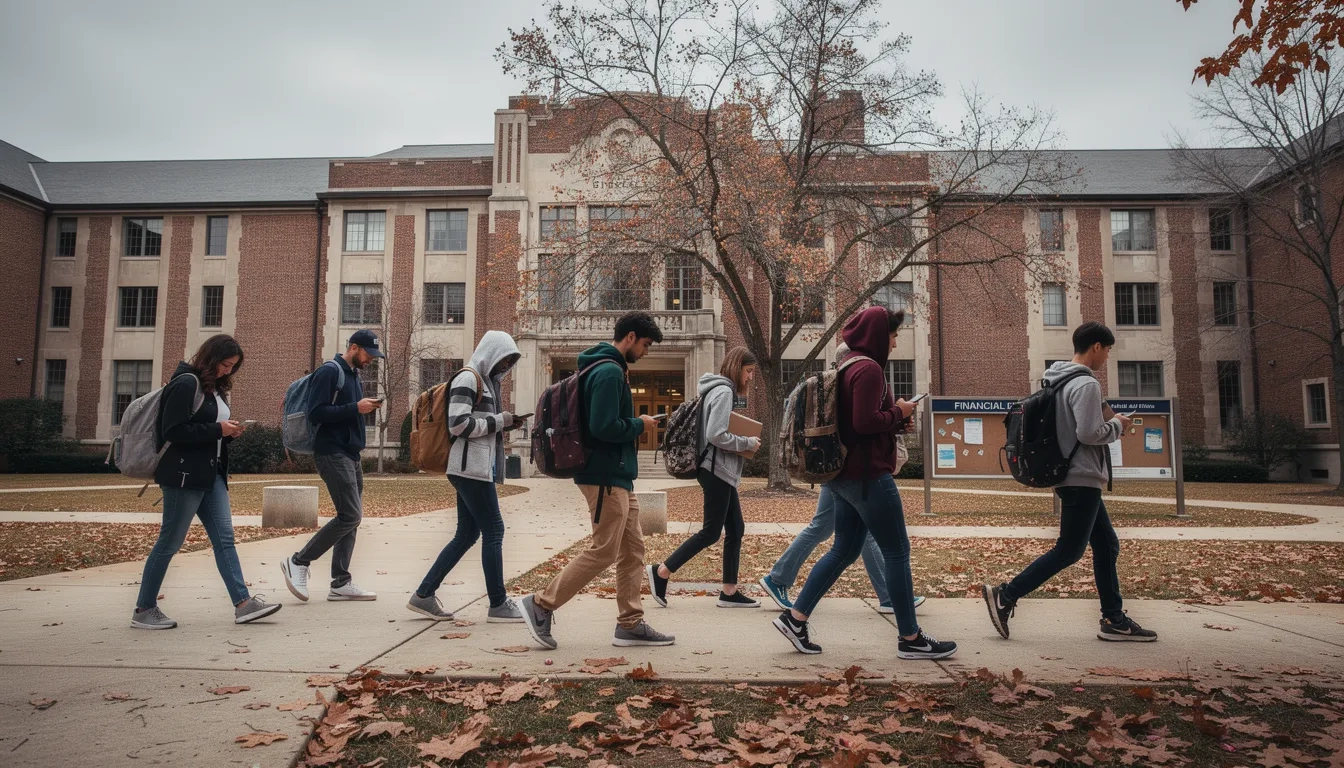
Here's a number that should stop you cold: 41 percent. That's the share of college students who reported food insecurity in the 30 days before completing Temple University's Hope Center for Student Basic Needs 2023-2024 survey — a study covering 74,350 students across 91 colleges in 16 states. Not "tight budget." Not "skipped a meal to save money." Genuinely unsure whether they'd eat.
And it's not a community college problem or a for-profit school problem. It runs through state flagships, private universities, and graduate programs alike.
The Scale of Student Hunger
The financial math behind college has broken down. The federal Pell Grant, originally designed to cover college costs for low-income students, now covers less than 25% of a four-year public university's costs. In the 1970s, that figure was closer to 75%. That gap didn't disappear — students absorbed it, usually through work, debt, or going without.
Rents near campuses have climbed. Grocery prices haven't helped. And the "typical" student isn't who most people picture. Feeding America's research found that 71% of U.S. undergraduates are now considered nontraditional by federal definitions — working full-time, raising children, or returning to school after a gap. Some 22% care for child dependents, and 14% are single parents.
When something has to give, food is often the thing. The Hope Center's same 2024 survey found that 59% of students experienced at least one form of basic needs insecurity — food, housing, or both — in the past year. When the definition expands to include child care, mental health, transportation, and technology access, that figure hits 73%.
How Campus Food Pantries Work
Most campus food pantries operate on a no-questions-asked, confidential basis. You show up with your student ID, take what you need, and leave. No income verification. No application. No waiting list.
The physical setup varies enormously from campus to campus. Some pantries are a single room with canned goods on metal shelving. Others have gone full grocery store: Austin Community College's Highland campus runs a pantry with shopping baskets and checkout lines, stocked with fresh produce alongside shelf-stable staples.
What a typical campus pantry stocks:
- Non-perishable foods (canned beans, pasta, rice, peanut butter, cereal)
- Fresh produce, when supply and storage allow
- Hygiene products (shampoo, soap, toothbrushes, deodorant)
- Period products
- Household cleaning supplies
- School supplies at select locations
Visit frequency is usually capped at once per week or once per month per student. Some campuses are moving toward 24/7 access models using smart-lock technology — which removes the awkward "walk in during business hours when your professor might see you" barrier entirely.
The Campus Food Pantry Directory
Finding the pantry at your school takes one search: "[your school name] + food pantry." But if you need a broader map, here are the networks and regional directories worth knowing.
The College and University Food Bank Alliance (CUFBA), now operating under Swipe Out Hunger after a 2023 merger, connects nearly 700 campus food pantries across North America. Their Campus Giving Directory at swipehunger.org lists programs by institution — useful for both students and donors. Feeding America's food bank network runs 316 pantries and 124 mobile pantry distributions directly on college campuses nationwide.
Notable campus pantries by region:
| Region | School | Pantry Name | Notes |
|---|---|---|---|
| California | UC Riverside | R'Pantry | Full grocery-style model |
| California | UC Santa Barbara | AS Food Bank | Student-run |
| California | USC | Trojan Food Pantry | Open to all students |
| Pennsylvania | University of Pittsburgh | Pitt Pantry | Food + household items |
| Pennsylvania | Drexel University | Drexel Food Pantry | Southeast Philadelphia |
| New York | University at Albany | Purple Pantry | Faculty and staff eligible too |
| New York | SUNY system | 64 campus programs | suny.edu/foodinsecurity |
| Texas | Austin Community College | ACC Food Pantry | Grocery-style layout |
| Ohio | Cuyahoga Community College | Tri-C Pantry | Over 200 student visits per week at one location |
This table covers a fraction of what's out there. SUNY alone lists 64 campus food resources across its system. Pennsylvania has at least 23 documented college pantries. Ohio's community colleges have pantries at nearly every campus.
If a quick web search doesn't surface an answer, try these steps:
- Search "[school name] basic needs" or "[school name] student services"
- Check the dean of students or student affairs office website directly
- Look for a "basic needs center" — many schools have consolidated food, housing, and financial services into one office
- Email student government; they often run or seed the pantry
- Call the campus library or student union front desk — staff there almost always know
The biggest barrier to using a campus food pantry isn't eligibility. It's awareness. The Hope Center's 2024 survey found that 48% of students experiencing food insecurity never engaged with any campus services — many because they simply didn't know help existed.
The Stigma Problem (And Why It's Fading)
Here's the elephant in the room. Food pantries carry a stigma that keeps people away. Students worry about being seen. They feel like they should manage on their own. They tell themselves that someone else needs it more.
The physical design of a pantry shapes whether students actually use it. When a space looks institutional or charity-adjacent, it signals crisis. When it looks like a normal place to grab groceries, it's easier to walk in without a second thought. This is exactly why schools like Austin Community College designed their pantries to resemble a grocery store rather than a donation bin.
Some campuses are going further. "Free market" layouts let students browse shelves like any store, with no interaction required at checkout beyond a student ID scan. Several UC campuses have experimented with embedding pantry pickup within regular dining operations, eliminating any separate "pantry line" to stand in.
The stigma isn't gone. But the smarter programs are quietly dismantling it by changing the context entirely, which is the right strategy. Shame is not a personal failing to be overcome — it's a design problem to be solved.
What Happens If Your Campus Doesn't Have a Pantry
Smaller private colleges and rural institutions are the most likely to lack a dedicated pantry. If that's your situation, you have real options.
Community food banks near campus often serve students directly. You don't need county residency — most food banks serve anyone experiencing food insecurity. Feeding America's food bank locator at feedingamerica.org can find the nearest location by zip code.
SNAP (Supplemental Nutrition Assistance Program) is chronically underused among college students. Federal rules historically restricted eligibility, but many students now qualify — particularly those working 20 or more hours per week, enrolled in eligible workforce training programs, or caring for a child. Campus basic needs centers will often help you apply and navigate the documentation.
Swipe sharing programs let students with unused meal plan swipes donate them to peers. Swipe Out Hunger developed this model and it now runs at dozens of campuses. If your school has a dining hall meal plan, this program may already exist there.
The Return on Investment Is Real
It might seem like a feel-good side program. It isn't.
Amarillo College tracked outcomes after Chancellor Russell Lowery-Hart invested in basic needs support: the school's graduation rate climbed from 15% to 28% between 2014 and 2023. A 2019 analysis of that investment projected a 16-to-1 return on a $300,000 basic needs commitment when measured in additional tuition revenue from students who stayed enrolled.
At Austin Community College, after Lowery-Hart moved to the chancellor role and quadrupled emergency aid budgets with a food bank at every campus, student retention improved by 23% over two years. Lorain County Community College saw on-time graduation rates rise 15 percentage points after opening an Advocacy and Resource Center, landing around 40%.
The pattern is consistent across institutions. When students aren't spending mental energy managing food insecurity, they perform better academically. This isn't speculation — it's documented repeatedly in the outcomes data. Schools that treat basic needs as an enrollment strategy rather than a charity program tend to get the better results.
How to Support Your Campus Pantry
If you want to help, a few things matter more than others.
Monetary donations stretch further than food donations because pantries can buy in bulk, fill specific inventory gaps, and cover refrigeration costs for fresh produce. Most campus pantries accept PayPal, Venmo, or institutional giving platforms. The Swipe Out Hunger Campus Giving Directory at swipehunger.org/campusgiving lets alumni or community members donate directly to specific school programs.
Physical donations are still welcome — most pantries maintain an Amazon Wishlist of needed items. Volunteering for sorting and distribution shifts is valuable too, especially around semester breaks when demand spikes and student volunteers disappear.
The most impactful long-term move is advocacy. Nearly 40% of campus support programs depend on donations for even basic operating costs, including staff salaries. Pushing your institution to fund pantry operations through the regular operating budget — rather than bake sales and payroll deductions — is what separates programs that last from programs that fold when a key volunteer graduates.
Bottom Line
- 41% of college students reported food insecurity in 2024. This is not a fringe issue at a handful of struggling schools. It reflects how higher education is funded and who actually attends college today.
- Your campus almost certainly has a pantry or basic needs center. Search "[school name] food pantry" first; the Swipe Out Hunger directory and your dean of students office are backup options.
- Show up with your student ID. No application, no income proof, no judgment. Confidentiality is standard practice at nearly every campus pantry.
- If your school has no pantry, community food banks, SNAP, and swipe sharing programs are genuine alternatives — not consolation prizes.
- The data on ROI is clear. Supporting campus food programs is retention strategy that happens to also feed people.
Frequently Asked Questions
Do I have to prove I'm low-income to use a campus food pantry?
No. The overwhelming majority of campus pantries operate on a no-questions-asked model. A valid student ID is all you need. Income verification is intentionally excluded because the paperwork and stigma consistently keep away the students who need help most.
Can graduate students use campus food pantries?
Yes, at most schools. Many pantries explicitly extend eligibility to graduate and professional students, and some include faculty and staff as well. Check your specific campus policy, but the trend across institutions is toward broader eligibility rather than narrower.
What's the difference between a campus food pantry and a food bank?
A campus pantry is run by or in partnership with a university, specifically to serve enrolled students, and is typically located in a campus building. A food bank is a regional organization that collects and redistributes food to anyone in need, usually operating out of a dedicated warehouse or facility. Many campus pantries source their food directly from a regional Feeding America food bank.
Is there a national website to find campus food pantries?
Swipe Out Hunger's Campus Giving Directory (swipehunger.org) is the closest thing to a national database. For SUNY schools specifically, suny.edu/foodinsecurity lists all 64 campus programs. For most other schools, a direct web search or a call to the student services office remains the most reliable method — campus pantries don't always make it into national databases promptly.
I feel like other students need the pantry more than I do. Should I still use it?
Yes. Campus pantries are funded and stocked for students — that includes you. The "someone else needs it more" instinct is one of the most common reasons students go hungry when help is nearby. The Hope Center's 2024 survey found that nearly half of food-insecure students never sought campus help. Using the pantry doesn't take anything from anyone; it uses resources raised for exactly your situation.
My campus doesn't have a food pantry. What can I do right now?
For immediate help: locate your nearest community food bank through feedingamerica.org, check SNAP eligibility at benefits.gov, and ask your student services office about emergency food funds or one-time meal vouchers. For longer-term change, contact student government — student advocacy is how most campus pantries get started. The National Student Campaign Against Hunger and Homelessness (studentsagainsthunger.org) publishes a free toolkit for launching a campus pantry from scratch.
Sources
- College Student Hunger Statistics | Feeding America
- 2023-2024 Student Basic Needs Survey Report | The Hope Center for Student Basic Needs
- 3 in 5 US undergrads struggle with basic needs | Christian Science Monitor
- Campus Giving Directory 2024 | Swipe Out Hunger
- 23 Food Cupboards & Pantries at PA Colleges and Universities | PA Eats
- Campus Food Pantries: Insights From a 2023 Survey | Swipe Out Hunger